Skin Tags, Moles and When to See Your GP
How skin tags, moles and other common skin growths usually look, the warning signs that mean you should see your GP first, and how cosmetic removal works.
 Magdalena Wasiewicz7 min read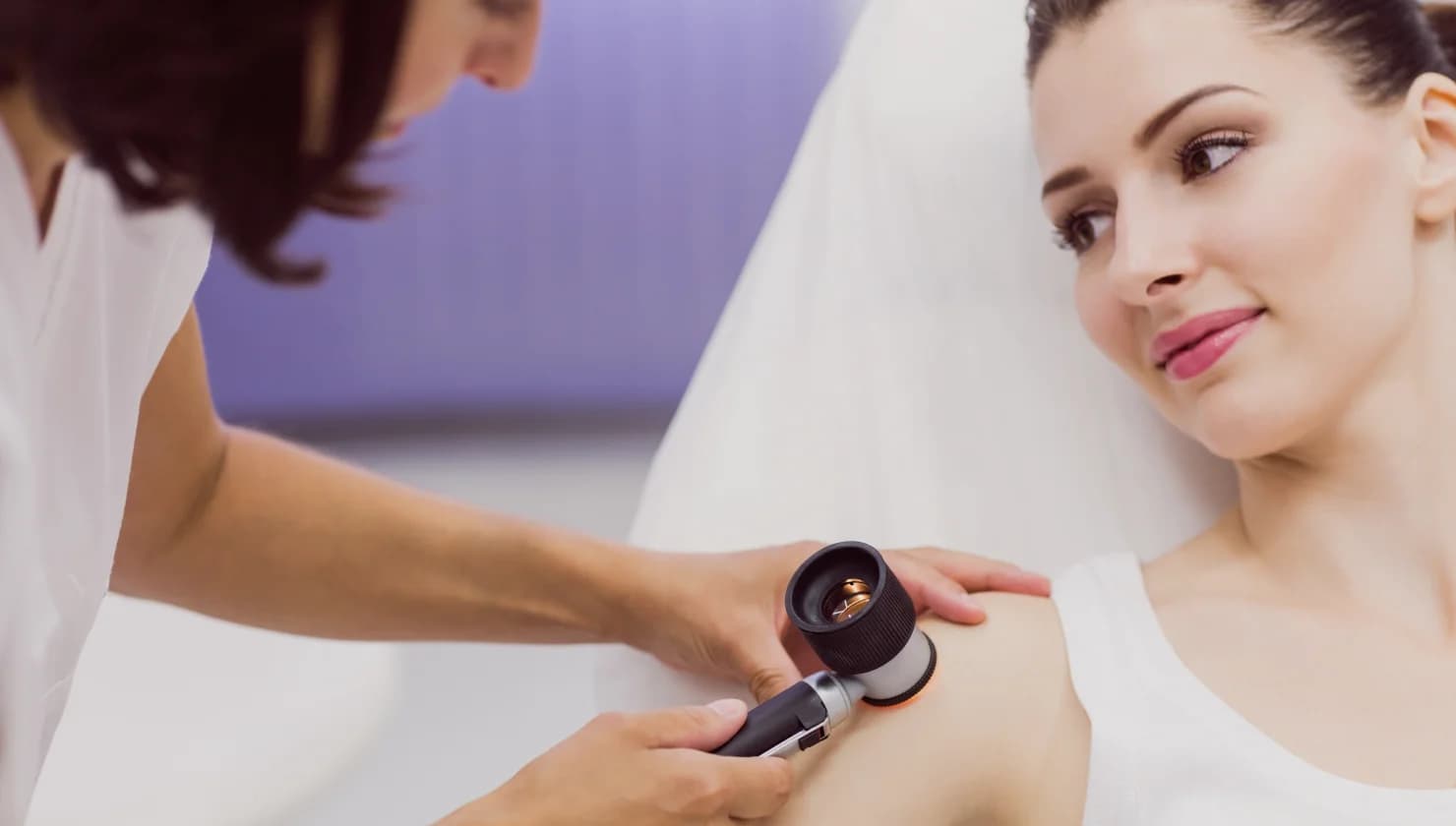
Skin tags are soft, skin-coloured flaps that often hang from the skin on a thin stalk, while moles are usually flat or raised brown spots made of pigment cells. Both are usually harmless, but see your GP promptly about any mole that is new, changing in size, shape or colour, itching, bleeding or crusting.
Is it a skin tag or a mole?
Most lumps, bumps and spots on the skin are harmless, and a handful of common growths account for most of the ones people ask us about. Knowing what they usually look like can help you feel less anxious. It cannot tell you what a particular spot on your own skin is, and neither can an article or a photo. Only a medical assessment can do that.
With that in mind, this is how the most common benign skin growths typically look and feel.
| Growth | Usually looks and feels like | Common places | Worth knowing |
|---|---|---|---|
| Skin tag | Soft, skin-coloured or slightly darker, often hanging on a thin stalk | Neck, armpits, groin, under the breasts, eyelids | Often catch on clothing, jewellery or razors |
| Ordinary mole | Round or oval, evenly brown, pink or skin-coloured, flat or raised, with a smooth edge | Anywhere on the body | Most people have several; a new mole in adulthood deserves a GP check |
| Seborrhoeic keratosis | Waxy, rough or warty patch that looks “stuck on”, light brown to almost black | Chest, back, face and scalp | Very common with age; can look alarming, so have it assessed |
| Cherry angioma | Small, bright red, dome-shaped spot | Trunk and arms | A cluster of tiny blood vessels; may bleed if knocked |
| Dermatofibroma | Small, firm, pink-brown bump that dimples inwards when pinched | Legs and arms | Sometimes appears after a minor injury such as an insect bite |
If a spot does not clearly fit one of these descriptions, or you are simply unsure, the answer is always the same: see your GP.
When should you see a GP about a mole?
The NHS advises seeing a GP if you have a mole that has changed size, shape or colour, a mole that is painful or itchy, one that is inflamed, bleeding or crusty, or a new or unusual mark that has not gone away after a few weeks. You can read the full guidance on the NHS moles page.
A widely used way to remember the warning signs of melanoma is the ABCDE checklist:
- A — Asymmetry: the two halves of the mole look different.
- B — Border: the edge is irregular, ragged, notched or blurred.
- C — Colours: a mix of two or more colours, or uneven shades of brown and black.
- D — Diameter: most melanomas are wider than about 6mm, though they can be smaller.
- E — Evolving: any change in size, shape, colour or height, or a new symptom.
Two more signs are worth adding. A mole that looks different from all your others, sometimes called the “ugly duckling”, deserves attention. And not every skin cancer is dark: a shiny or pearly lump, a scaly or crusted patch, or a sore that will not heal within a few weeks should also be checked. The NHS page on melanoma skin cancer has more detail.
Please do not wait for a cosmetic appointment if you are worried about a spot. Your GP is the right first step, and early assessment makes a real difference.
Will the NHS remove a skin tag or mole?
Usually not for cosmetic reasons. According to the NHS, skin tags are not removed on the NHS because it is considered cosmetic surgery, and harmless moles are not usually treated either. If your GP is concerned about a mole or lesion, they will arrange the right assessment and, where needed, removal and testing through NHS services. The NHS skin tags page explains more.
That leaves many people with harmless growths that bother them. Skin tags catch on necklaces, collars, bra straps and razors, and can bleed when snagged. Others simply dislike how a raised mole or rough keratosis looks on the face or neck, or find it gets in the way of shaving and make-up. This is where cosmetic removal can help.
How does cosmetic removal work at Skin Anatomy?
Every removal starts with an assessment. We look closely at the growth, ask how long you have had it and whether it has changed, and go through your medical history. We do not diagnose skin conditions. If a lesion is new, changing, itchy, bleeding or looks in any way uncertain, we will ask you to see your GP first, and we will not treat it until it has been medically assessed.
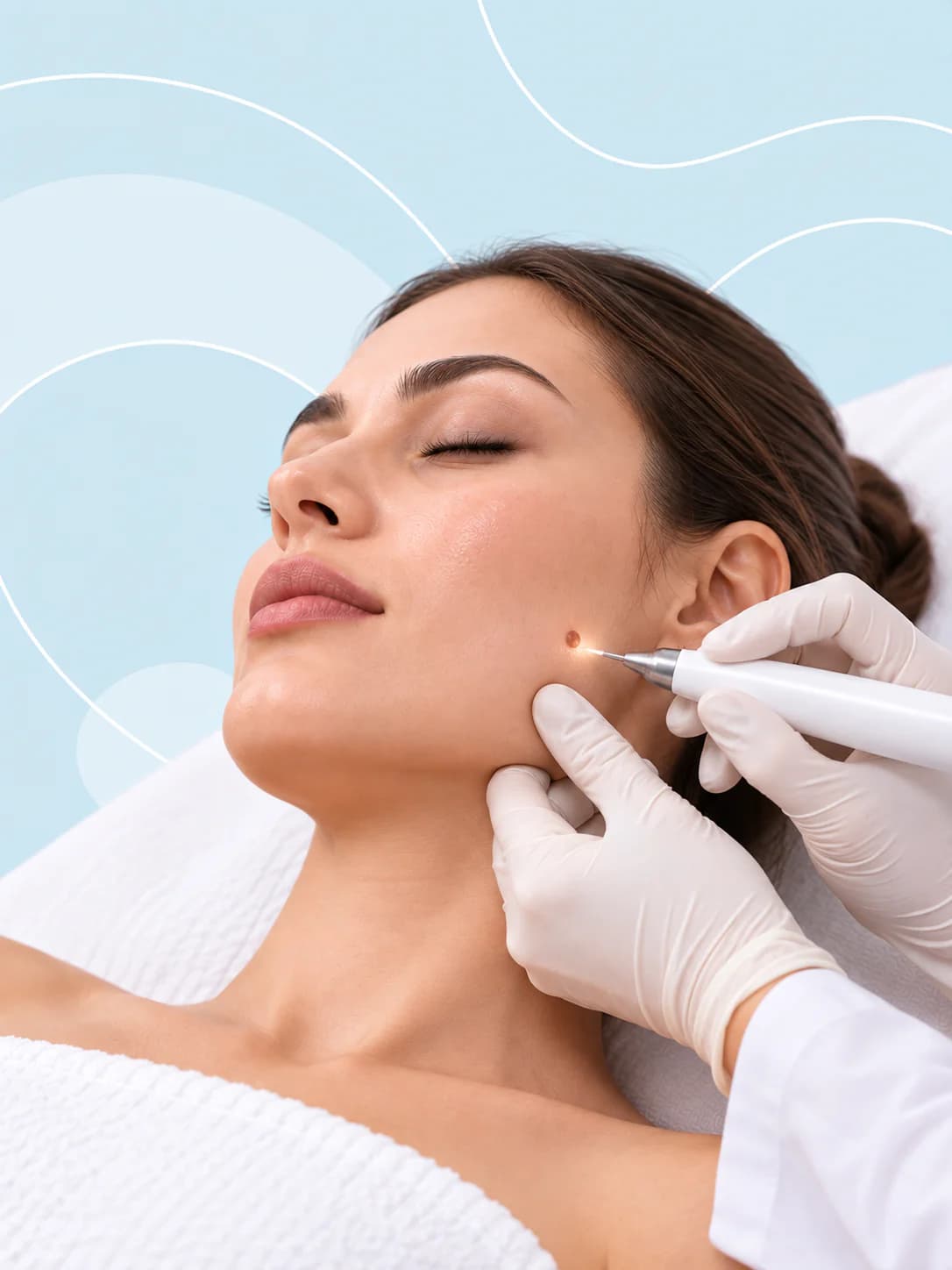
When a growth appears clearly benign, we can remove it with the SmartXEL CO2 laser. With its surgical handpiece, the laser can remove skin tags, moles, seborrhoeic keratoses, freckles and other pigmented lesions. The area is numbed, then the laser removes the tissue layer by layer with a high degree of precision, sealing tiny blood vessels as it works so bleeding is usually minimal. Most lesions are dealt with in a single visit.
An honest point about laser removal and testing
Laser removal vaporises the tissue, which means there is nothing left to send to a laboratory for analysis. That is exactly why uncertain lesions must be assessed medically before any cosmetic removal. If a growth needs testing, it should be removed by a method that keeps the tissue intact, which your GP can arrange. Getting this order right protects you.
Healing and aftercare
A small scab or crust usually forms and falls away within about one to two weeks, sometimes longer for larger lesions. Underneath, the new skin is pink at first and gradually fades over the following weeks to months.
- Keep the area clean and dry, and follow the aftercare instructions you are given.
- Do not pick or pull off the scab; let it come away naturally.
- Avoid swimming pools, saunas and steam rooms until the skin has healed.
- Protect the healing mark from the sun with SPF 50 for several months, especially on the face.
- Wait until the skin has fully healed before applying make-up over the area.
What are the risks?
Removal is generally straightforward, but it is still a procedure on your skin. Possible risks include a small scar, which may be slightly sunken or raised; a mark that is lighter or darker than the surrounding skin, which is more likely in darker skin tones; infection, which is uncommon; and regrowth, particularly of moles whose pigment cells sit deeper in the skin. If a treated mole grows back, have it checked by your GP before any further treatment.
Why you shouldn’t remove skin tags or moles yourself
The NHS advises against removing a skin tag yourself unless a GP recommends it. Home methods carry real risks:
- Cutting or snipping can cause heavy bleeding and infection.
- Tying off with thread or floss can lead to infection and pain.
- Removal creams can cause chemical burns and scarring to the surrounding skin.
- Home freezing kits can damage healthy skin and leave marks.
Most importantly, removing a mole at home destroys the chance of it being checked, and can hide warning signs of something that needed medical attention.
Everyday skin checks and sun protection
May is a good moment to build skin habits for the months ahead. Even here in Nottinghamshire, UV levels are high enough to burn from spring into early autumn.
- Check your skin once a month, using a mirror or asking someone to look at your back and scalp.
- Photograph moles you want to keep an eye on, so changes are easier to spot.
- Use a sunscreen of at least SPF 30 with a high UVA rating, and reapply regularly.
- Seek shade between 11am and 3pm, cover up, and avoid sunbeds.
If sun damage has already left uneven tone or age spots, our page on pigmentation and sun damage explains the options, and our CO2 laser recovery guide shows what resurfacing involves.
Book an assessment in Southwell
If you have a skin tag or growth that you would like removed, and it has already been checked or has not changed, come and see us at 17 Queen Street, Southwell. Clients visit from Southwell, Mansfield, Newark and Nottingham. Read more about skin tags and benign lesions and skin tag and mole removal, check prices in our price guide, or book a free consultation.
This article is general information, not medical advice, and cannot diagnose any skin growth. If you are worried about a mole or spot, see your GP. Individual results vary. Treatments at Skin Anatomy are for adults aged 18 and over.
This article is general information, not personal medical advice. Treatments are for adults aged 18 and over, suitability is assessed at a consultation, and individual results vary. If you have a new or changing mole, or any skin symptom that worries you, please see your GP.
Book an Appointment
It's easy — and consultations are free.
Questions Answered
How can I tell if a mole is cancerous?
Does the NHS remove skin tags?
Can you remove a mole that has changed?
Will a skin tag grow back after it is removed?
Does skin tag or mole removal leave a mark?
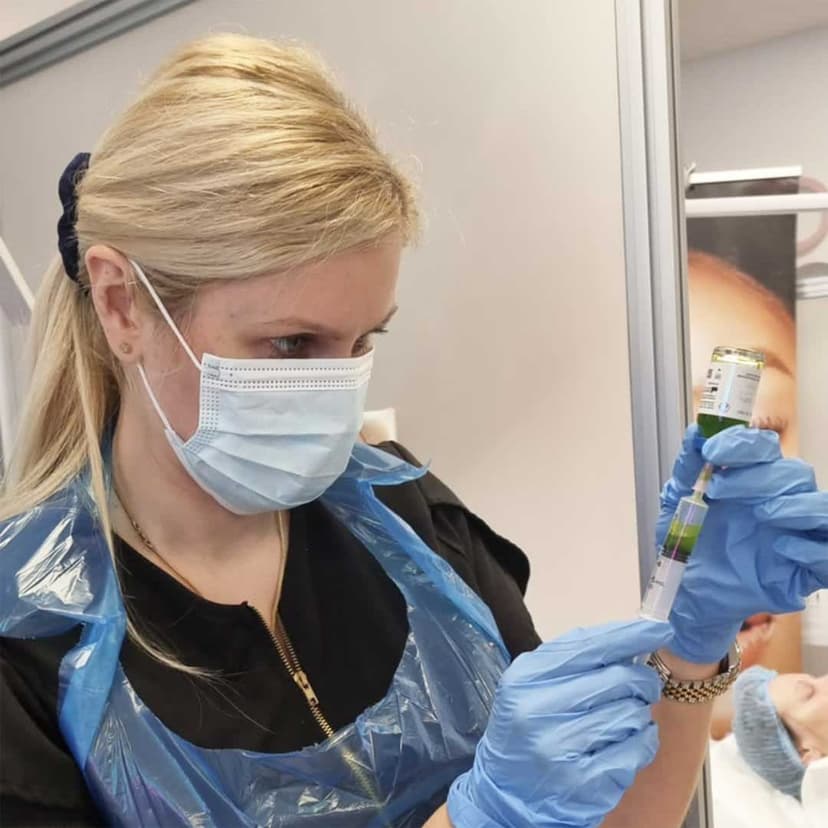
Magdalena Wasiewicz
Founder & Lead Aesthetic Practitioner
Founder of Skin Anatomy, fully qualified to the highest level in aesthetic practice and currently studying medicine.
Open Profile