Skin Tag & Mole Removal
- Skin tag removal – first tag£75
- Skin tag removal – each additional tag£25
- Benign mole / lesion removalFrom £120
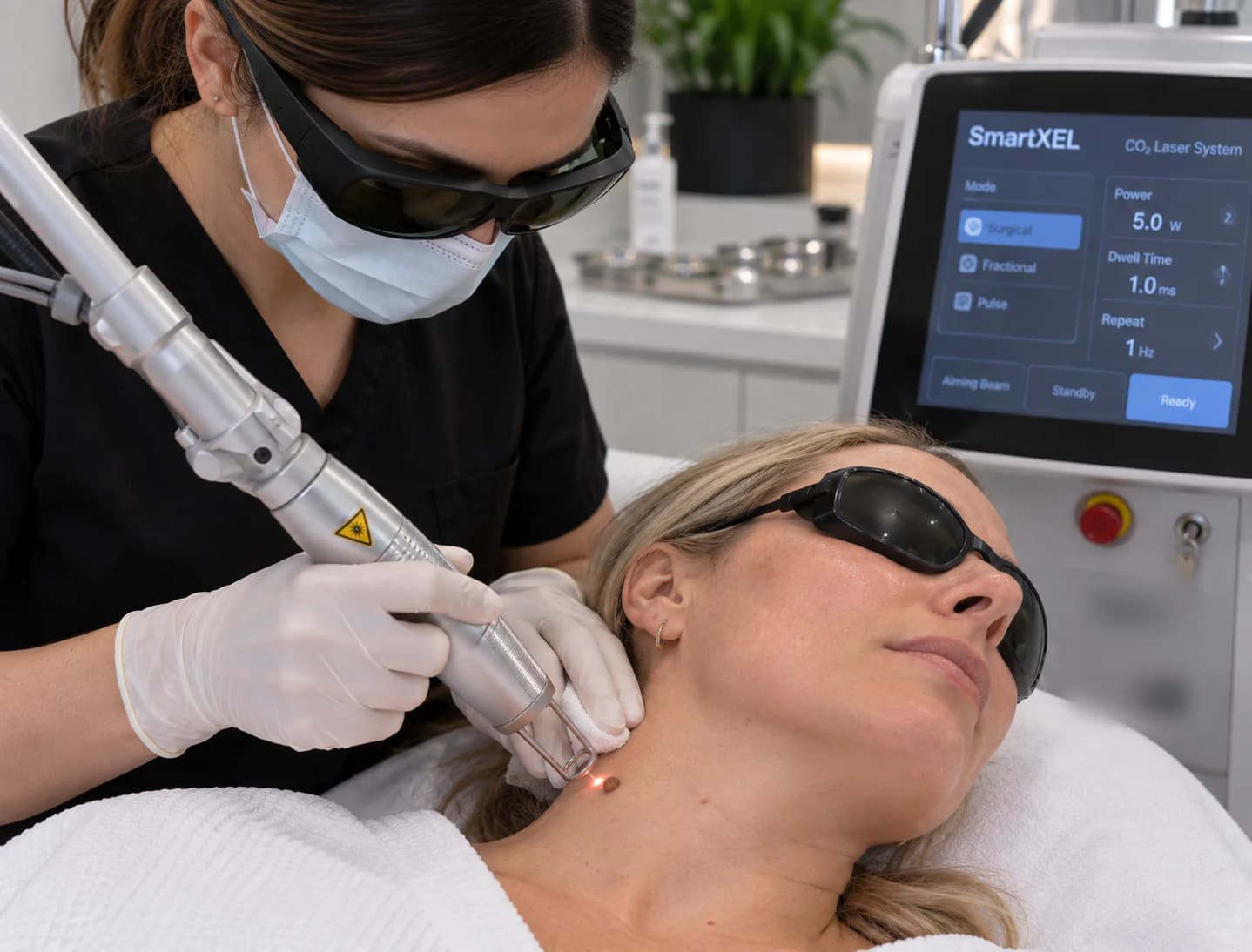
Skin tag, mole and lesion removal is a cosmetic procedure that uses a precise CO2 laser to vaporise benign skin growths layer by layer. At Skin Anatomy in Southwell, Nottinghamshire, we remove skin tags, benign moles, seborrhoeic keratoses and pigmented spots after assessment, referring anything changing or suspicious to your GP.
Skin tags, benign moles, seborrhoeic keratoses and flat pigmented spots are very common and usually harmless, but they can catch on jewellery, collars and bra straps, bleed when shaving, or simply make you self-conscious. Many people live with them for years because the NHS does not usually remove harmless growths for cosmetic reasons. A private cosmetic removal can be a quick, practical solution once a lesion has been assessed as suitable.
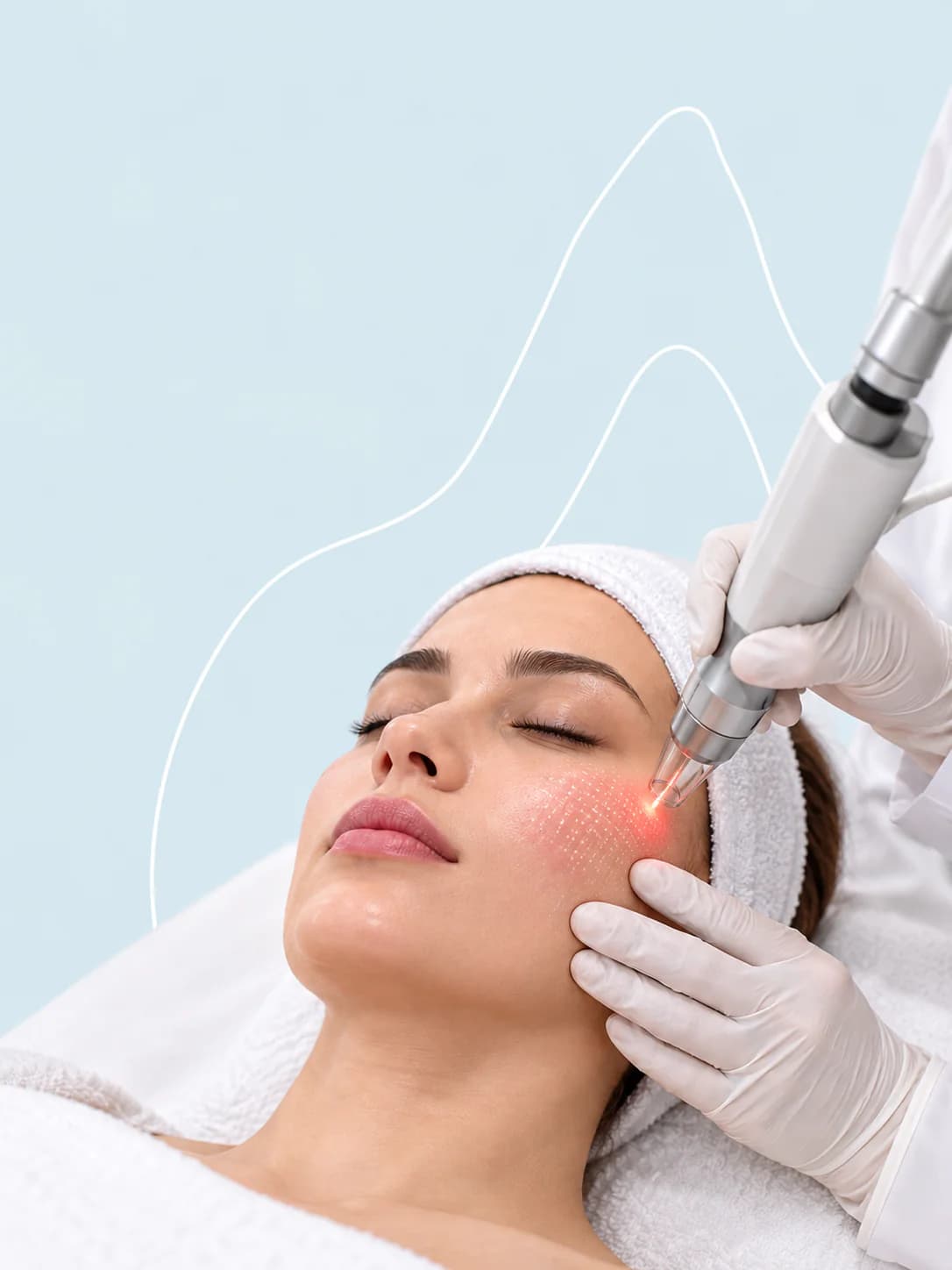
At Skin Anatomy we use the surgical handpiece of our SmartXEL CO2 laser. It delivers a fine, focused beam that vaporises the growth layer by layer while sealing tiny blood vessels as it works, so there is little or no bleeding and no stitches. Because the energy is so precise, Magdalena can remove the lesion level with the surrounding skin and keep the treated area as small as possible, which helps it heal neatly.
Safety comes first. Every lesion is examined at your consultation before anything is booked, and we only treat growths that look typical of harmless skin tags, benign moles, seborrhoeic keratoses or sun spots. If a mole or lesion is new, changing in size, shape or colour, bleeding, itchy, crusting, irregular or otherwise concerning, we will not treat it and will ask you to see your GP. Laser removal vaporises the tissue, so nothing is sent for laboratory analysis — removal is cosmetic and is not a diagnosis or a skin cancer check.
Most people are in and out within half an hour and go straight back to their day, and several skin tags can often be removed in one appointment. Healing is straightforward: a small scab forms, falls away on its own within about two weeks, and the pink skin underneath gradually blends in. Clients visit us in Southwell from Nottingham, Newark-on-Trent, Mansfield and the surrounding villages for this quick, discreet treatment.
Once we have confirmed at consultation that each lesion is suitable, we clean the skin and numb the area so treatment is comfortable. Protective eyewear is worn. The SmartXEL surgical handpiece then vaporises the growth in fine layers until it is level with the surrounding skin, sealing small blood vessels as it goes; skin tags on a stalk are treated at the base. The area is cleaned and a protective ointment applied. Most lesions take only a few minutes each.
Laser removal is quick, usually needs just one visit and avoids stitches. The precise beam limits heat to the treated spot, which helps keep the mark small, and sealing of blood vessels means very little bleeding. You can return to normal activities straight away, and removing tags that catch on clothing or jewellery ends the irritation and bleeding they cause. Many clients also feel more confident once a long-standing growth on the face or neck has gone.
Expect a small pink, raw-looking area that forms a scab and heals over one to two weeks. Afterwards the skin may stay pink or slightly lighter or darker than the surrounding skin for several weeks or months. Some clients are left with a small flat mark or, rarely, a scar or indentation. Infection is uncommon if aftercare is followed. Some moles can regrow and need further assessment. Because the tissue is vaporised it cannot be checked in a laboratory, which is why suspicious lesions are always referred to a GP rather than treated.
The area may feel slightly tender or warm for a few hours. A small scab forms within a day or two and usually falls away on its own after about 7–14 days, depending on size and location, revealing pink new skin that fades gradually over the following weeks. Keep the area clean, apply the recommended ointment and avoid picking the scab. You can shower normally, but avoid swimming, saunas and heavy sweating on the area until it has healed, and protect it from the sun with SPF50.
Contact the clinic if the treated area becomes increasingly red, hot, swollen or painful after the first couple of days, oozes pus, or has not healed after three weeks. Please also get in touch if a treated mole appears to grow back or changes in any way, and see your GP promptly about any other mole or lesion that is new, changing, bleeding or irregular. If you feel unwell with a fever or spreading redness outside clinic hours, contact NHS 111.
Treatments are for adults aged 18 and over. We check your medical history at your consultation and will always tell you honestly if a treatment isn’t right for you.
We confirm which areas are suitable for you at your free consultation.
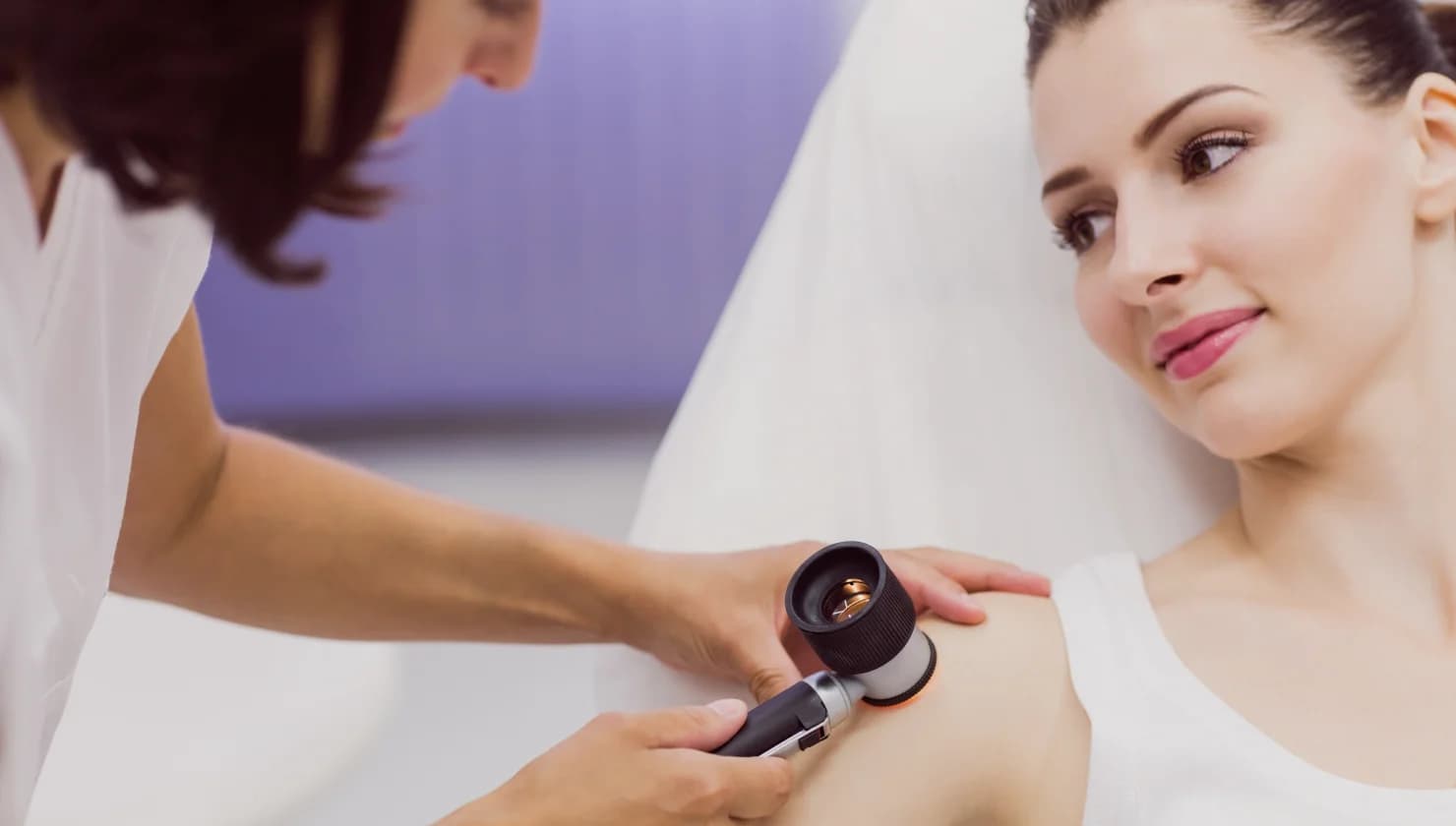
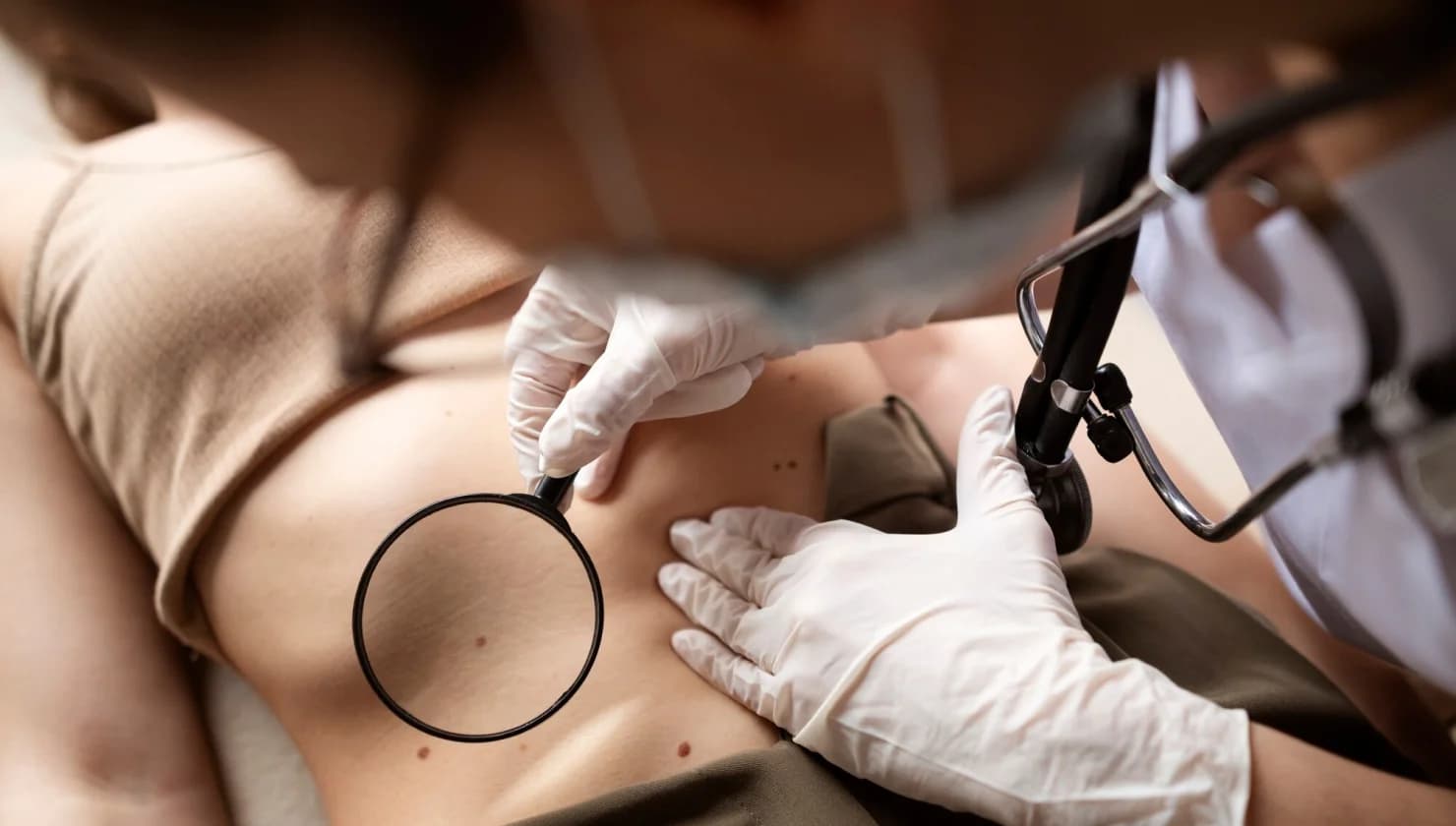
Magdalena examines each lesion, asks how long you have had it and whether it has changed, and checks your medical history. If it looks typical of a benign skin tag, mole or keratosis, we explain the treatment, likely healing and any risk of marking. Anything unusual is referred to your GP instead of being treated.
Avoid sun exposure and fake tan on the area for a couple of weeks beforehand. Let us know about blood-thinning medication, a tendency to scar, or cold sores if the lesion is near the mouth. Please do not try to cut, tie off or freeze lesions at home before your appointment.
The area is cleaned and numbed, and protective eyewear is fitted. The SmartXEL surgical handpiece removes each lesion in fine layers until it is level with the skin, usually taking a few minutes per lesion. We apply a protective ointment and, where helpful, a small dressing before you leave.
You go home with written aftercare. A small scab forms and falls away naturally after about one to two weeks. We are happy to review healing, and if a mole shows signs of regrowth later we can reassess it. Any change you are unsure about should be checked by your GP.
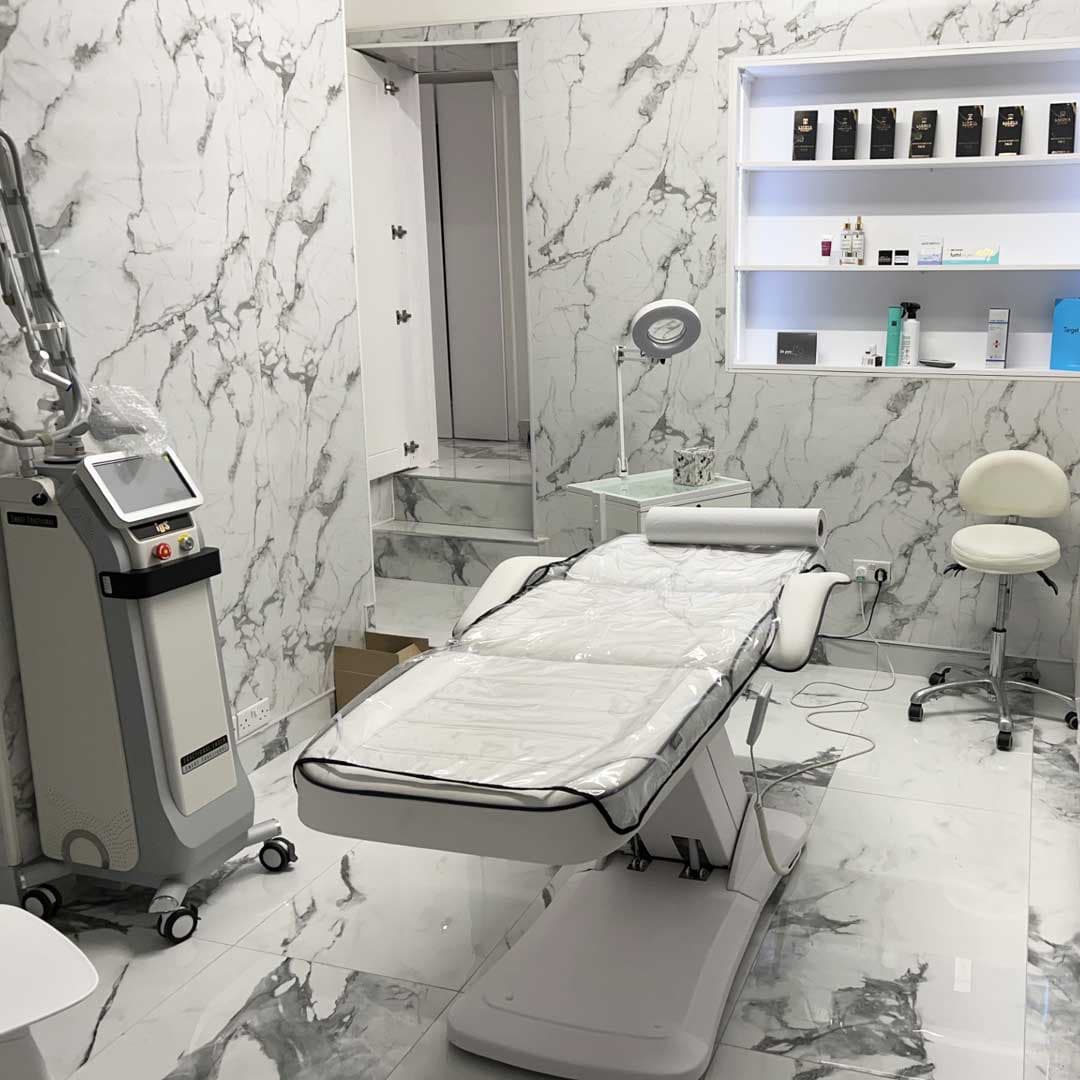
As well as fractional resurfacing, our SmartXEL CO2 laser has a surgical handpiece that focuses the beam into a fine, continuous point. This vaporises unwanted tissue with great precision while sealing small blood vessels, so bleeding is minimal and stitches are not needed. The practitioner controls the depth in tiny increments, removing a lesion gradually until it sits level with the surrounding skin, which helps limit the size of the treated area and supports neat healing.
Every treatment starts with a free, no-obligation consultation. Prices include VAT; where a price is shown as “from”, your exact cost depends on your assessment and is confirmed before you book.
Rated 5.0 from 29 reviews on Google

“I recently went to Skin Anatomy for CO2 fractional laser and the E50 exosomes, and honestly, the whole experience was brilliant. Both Harper and Magdalena were so professional but genuinely friendly with it. What I really…”

“Exceptional practitioner with an incredible eye for facial balance and natural aesthetics. I’ve had [anti-wrinkle treatment] treatments with Magdalena for many years, and recently I had lip filler as well. What stood out most was…”

“I had the laser treatment on my face, neck and chest last Tuesday. I am still healing as I braved going for an high level treatment. I am already seeing a big difference and I am very happy with the results. I was made to feel at…”

“I had my co2 laser treatment a few weeks ago with Magdalena and I'm so happy I went with her. She's very knowledgeable and she and Harper answered all my questions, no problem. The treatment was quicker than I expected and after…”

“I had a polynucleotide treatment around my eyes and my face. Magda was extremely thorough and very gentle and the results are amazing, my skin looks glowing. I am so pleased and will definitely be returning!”

“Magdalena is very professional, knowledgeable and very good at what she does! Highly recommend! I had a C02 laser treatment done with her and I think it’s the best thing I’ve ever done!! Thank you so much Magdalena xx”
Some reviews have been lightly edited, shown in square brackets, to meet UK advertising rules on prescription-only medicines.
Most side effects are mild and settle on their own. We explain every risk at your consultation and give you written aftercare. If you are worried after treatment, call us on 07777 711 277; for anything urgent, contact NHS 111, or 999 in an emergency.
Skin Anatomy is at 17 Queen Street, Southwell, Nottinghamshire NG25 0AA, around 30 minutes from Nottingham, 15 minutes from Newark-on-Trent and 25 minutes from Mansfield by car (approximate). Clients visit us for Skin Tag & Mole Removal from Southwell and the surrounding villages, as well as Nottingham, Newark-on-Trent, Mansfield, Bingham and Ollerton. Find travel and parking tips for your town: