Endolaser: Non-Surgical Jawline and Neck Tightening Explained
How Endolaser tightens the jawline, chin and neck from beneath the skin, who it suits, recovery, risks and how it compares with other options.
 Magdalena Wasiewicz6 min read
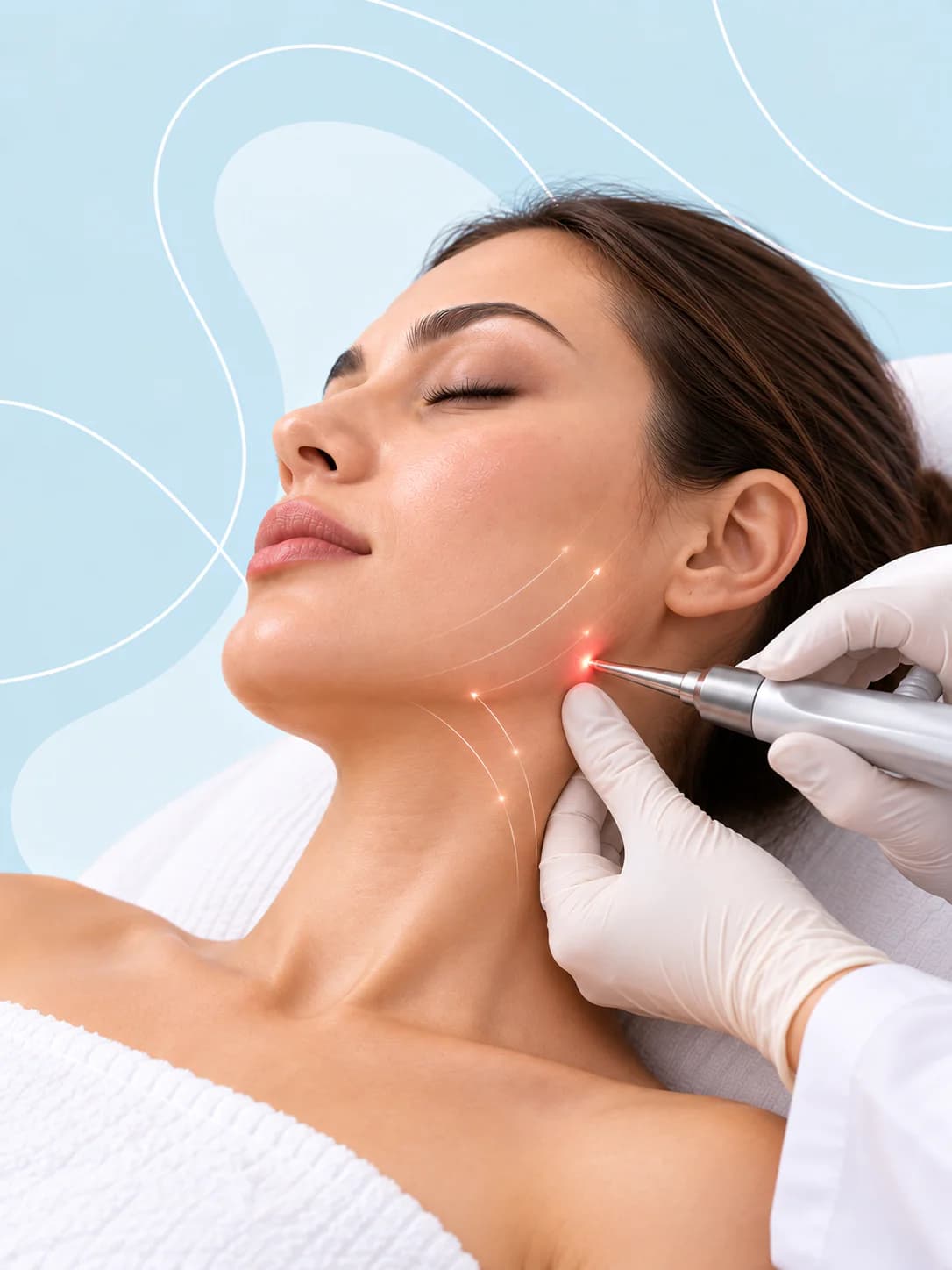
Endolaser is a minimally invasive skin-tightening treatment in which a very fine laser fibre is placed beneath the skin through a tiny entry point, delivering controlled heat that tightens tissue and stimulates collagen. It suits mild to moderate laxity along the jawline, under the chin and neck, with results developing over three to six months.
Endolaser is new at Skin Anatomy, and it sits in an interesting space between skin treatments that work from the surface and surgery. It will not replace a facelift, but for the right person it can restore definition along the jaw and firm the neck without incisions or stitches. This guide explains how it works, who it suits and, just as importantly, who it does not.
What is Endolaser and how does it work?
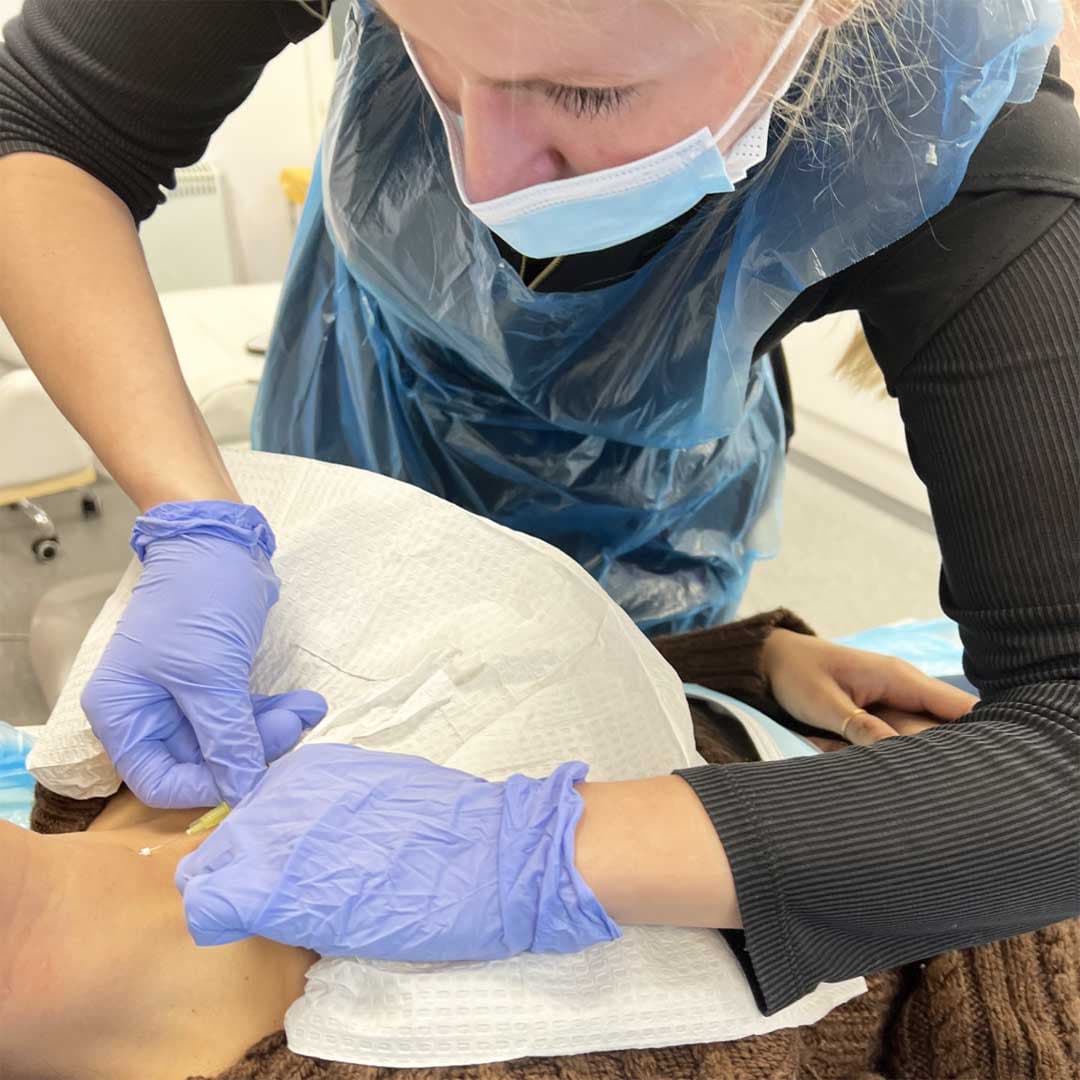
Most skin-tightening treatments deliver energy through the surface of the skin. Endolaser works the other way round. After local anaesthetic, a very fine optical fibre is introduced beneath the skin through a tiny entry point made with a needle. The fibre is moved slowly through the tissue in a fan-shaped pattern, delivering carefully controlled laser energy from within.
Many Endolaser systems use a diode laser at a wavelength of around 1470 nm, which is strongly absorbed by water and fat. The heat does three useful things:
- Contracts existing collagen fibres, which is why some tightening can be noticed within days.
- Stimulates fibroblasts to produce new collagen and elastin, so firmness continues to improve over the following months.
- Can reduce small pockets of fat, such as under the chin, in suitable cases.
You may also see this type of treatment described as endolift or interstitial laser tightening. Devices and techniques differ, so always ask which system a clinic uses and how much experience they have with it.
What can Endolaser treat?
- Loss of jawline definition and early jowling
- Fullness under the chin
- Laxity in the lower face
- Loose or crepey skin on the neck
- Mild sagging in the cheeks
- Under-eye crepiness, in carefully selected cases only
If your main concern is loose skin along the jaw, our page on skin laxity and jowls explains the range of options we consider.
Is Endolaser right for me?
Endolaser tends to suit people who want a more lifted, defined appearance, prefer tightening to added volume, and have mild to moderate laxity. It is often chosen by clients noticing early signs of ageing who want natural-looking results without heavy filler.
It is less likely to be the right choice if you have significant excess skin, heavy jowls or pronounced neck banding. In those situations, the improvement from any non-surgical treatment may be disappointing, and a consultation with a plastic surgeon is often the more honest recommendation. The NHS overview of facelift surgery is a helpful starting point if you are weighing up surgery.
Endolaser is not suitable, or needs to be postponed, if you:
- are pregnant or breastfeeding;
- have an active skin infection or inflammation in the area;
- have a bleeding disorder or take blood-thinning medication (this needs careful discussion);
- have a condition that affects healing, or a history of keloid scarring;
- have had fillers or threads in the area recently, as timing needs to be planned;
- are under 18. All treatments at Skin Anatomy are for adults only.
What happens during an Endolaser treatment?
- Free consultation. We assess your skin quality, the degree of laxity and any fat under the chin, take a full medical history and photographs, and talk through realistic outcomes.
- Mapping. On treatment day, the areas to be treated and the structures to avoid are marked carefully.
- Numbing. The skin is cleansed and local anaesthetic is used at the entry points and through the treatment area. Most clients feel pressure and warmth rather than sharp pain.
- Treatment. The fibre is guided beneath the skin in a controlled pattern while energy delivery is monitored throughout.
- Aftercare. We explain what to expect, give you written aftercare and arrange a review. You go home the same day.
Endolaser recovery and results timeline
| When | What to expect |
|---|---|
| Treatment day | Swelling, a feeling of tightness and tiny entry marks. Initial tightening may already be noticeable |
| Days 3–7 | Swelling gradually settles. Mild bruising is possible and fades over this period |
| Up to 2 weeks | A sensation of tightness or firmness under the skin can persist |
| 8–12 weeks | Continued improvement as new collagen forms |
| 3–6 months | Final results are usually visible |
Most clients return to normal activities quickly. For the first few days we usually advise avoiding strenuous exercise, saunas, steam rooms, hot baths and alcohol, sleeping with your head slightly raised, and following your written aftercare closely. Clients typically notice firmer skin, improved definition and a fresher appearance, but results vary from person to person.
How does Endolaser compare with other jawline and neck treatments?
| Treatment | How it works | Best for | Downtime | At Skin Anatomy? |
|---|---|---|---|---|
| Endolaser | Laser fibre heats tissue from beneath the skin | Mild to moderate laxity, jawline, under-chin, neck | Swelling 3–7 days, possible bruising | Yes |
| HIFU | Focused ultrasound delivered through the skin | Mild laxity; no needles | Usually minimal | No |
| Radiofrequency microneedling | Needles deliver heat into the upper layers of skin | Skin texture with mild tightening | 1–3 days; several sessions | No |
| Dermal fillers | Hyaluronic acid adds structure to the jaw and chin | Definition through volume rather than tightening | Minimal; possible swelling and bruising | Yes |
| Fat dissolving injections | Injections break down small fat deposits | Small pockets of fat under the chin | Swelling for several days; a course | Yes |
| Facelift surgery | Excess skin removed and deeper tissues lifted | Significant laxity and excess skin | Weeks; general anaesthetic or sedation | No |
For some clients, the best result comes from combining treatments. A dermal filler can strengthen a recessed chin while Endolaser tightens the skin around it, and fat dissolving injections can address a stubborn pocket under the chin. Our guide to fat dissolving injections explains what that treatment can realistically achieve.
Can Endolaser be combined with CO2 laser?
Yes, and the two work at different levels. Endolaser tightens from beneath, while fractional CO2 laser resurfacing improves the surface: fine lines, crepey texture, sun damage and pores. Treatments are usually spaced rather than done on the same day, and we plan the order and timing at your consultation. If you are considering both, our CO2 laser recovery guide shows what the surface downtime involves.
What are the risks and side effects of Endolaser?
Every treatment that goes beneath the skin carries risks, and you should be told about them clearly. With Endolaser they include:
- Swelling, bruising, tenderness and temporary numbness, which are common and usually settle.
- Firm areas or small lumps under the skin, which typically soften over weeks.
- Burns to the skin surface, which are uncommon and reduced by careful technique and monitoring.
- Temporary weakness of a nerve along the jawline, which can make the smile look uneven for a period.
- Infection at the entry points.
- Asymmetry, or less improvement than hoped.
Contact us promptly if you notice increasing pain, heat or spreading redness, discharge, a fever, or any change in the way your smile moves.
How long do Endolaser results last?
Because Endolaser works by stimulating your own collagen, results are long-lasting, but they do not stop the natural ageing process. Longevity varies with age, skin quality, weight changes, sun exposure and smoking, and published long-term evidence is still limited. Many people need only one treatment, while others benefit from a further session or maintenance treatments later, which we would discuss at your review.
Endolaser in Southwell, Nottinghamshire
We offer Endolaser at our clinic at 17 Queen Street, Southwell, and welcome clients from across Nottinghamshire, including Bingham, Newark and Nottingham. Starting prices are listed on our price guide, and you can read more on the Endolaser skin tightening page.
Every Endolaser treatment starts with a free consultation, where we assess whether it is genuinely the right option for you, or whether another treatment, or a surgical opinion, would serve you better.
This article is general information, not medical advice, and does not replace a face-to-face assessment. Individual results vary. Treatments at Skin Anatomy are available to adults aged 18 and over.
This article is general information, not personal medical advice. Treatments are for adults aged 18 and over, suitability is assessed at a consultation, and individual results vary. If you have a new or changing mole, or any skin symptom that worries you, please see your GP.
Book an Appointment
It's easy — and consultations are free.
Questions Answered
How long does Endolaser take to work on the jawline?
What is the downtime after Endolaser?
Is Endolaser the same as a facelift?
Does Endolaser hurt?
Who is not suitable for Endolaser?
Magdalena Wasiewicz
Founder & Lead Aesthetic Practitioner
Founder of Skin Anatomy, fully qualified to the highest level in aesthetic practice and currently studying medicine.
Open Profile