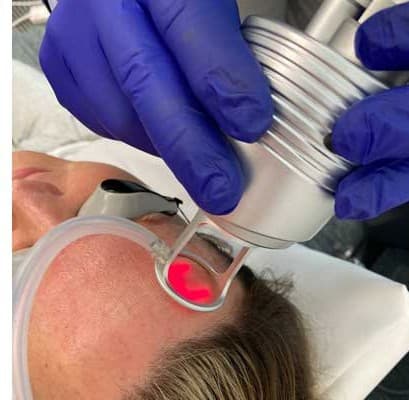
CO2 Laser vs Other Resurfacing Options for Acne Scars
Fractional CO2 laser, microneedling, peels, subcision and fillers compared for acne scars: downtime, sessions, skin tone and realistic results.
 Magdalena Wasiewicz6 min read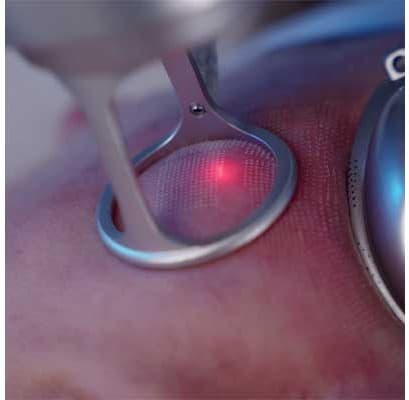
For deep, textured acne scars, fractional CO2 laser is widely regarded as one of the most effective resurfacing options, typically softening rolling and boxcar scars over three to five sessions. Microneedling, non-ablative lasers and peels involve less downtime but usually need more sessions, while ice-pick scars often respond better to targeted techniques. Combining treatments often works best.
Acne scars are rarely one single type, and that is exactly why there is no single “best” treatment. The right plan depends on the shape and depth of your scars, your skin tone, how much downtime you can manage and whether your acne is still active. Here is an honest comparison of the main options, including the ones we do not offer at Skin Anatomy.
What type of acne scars do you have?
Before comparing treatments, it helps to know what you are treating. Most people have a mixture.
- Rolling scars: broad, shallow dips with soft edges that make the skin look uneven, especially in side lighting. They are often tethered to deeper tissue.
- Boxcar scars: round or oval depressions with sharper, defined edges.
- Ice-pick scars: narrow, deep pits that look like large open pores.
- Raised scars: hypertrophic or keloid scars that sit above the skin, more common on the chest, back and jawline.
It is also important to separate true scars from marks. Red or purple marks (post-inflammatory erythema) and brown marks (post-inflammatory hyperpigmentation) are changes in colour rather than texture, and many fade over months with sun protection. They respond to different approaches, so we assess both at your consultation. Our acne scars page explains the types in more detail.
How does fractional CO2 laser improve acne scars?
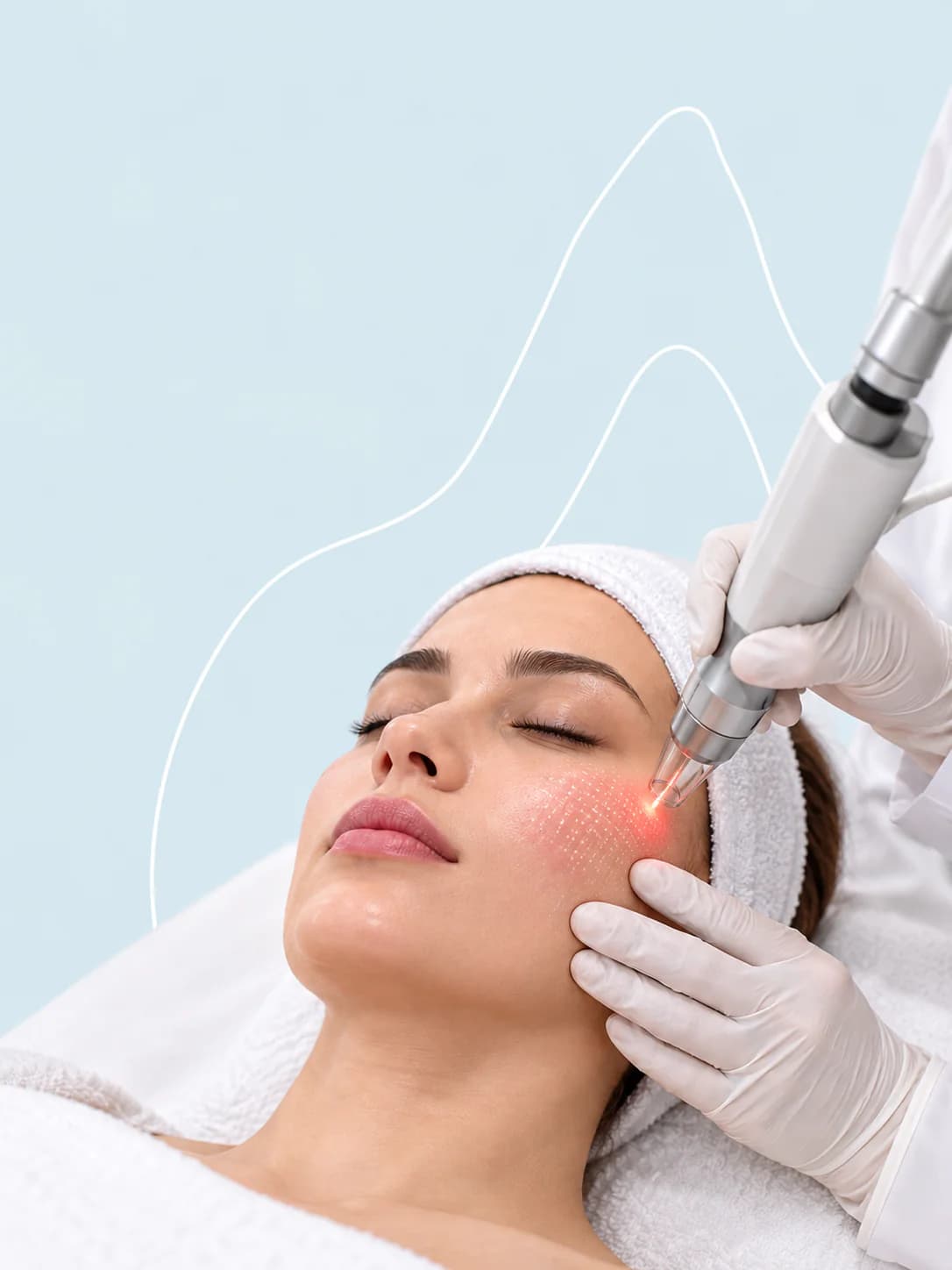
We use the SmartXEL fractional CO2 laser. The beam is divided into an array of microscopic shafts of laser light that create tiny channels in the skin, breaking down scar tissue and resurfacing the outer layer. SmartXEL’s double-pulse technology then delivers a second pulse to heat the dermis, prompting fibroblasts to produce new collagen. Collagen provides structure and strength, so as it rebuilds, the skin thickens and indentations become shallower and smoother.
For scarring, three to five sessions are usually recommended. The surface heals in around seven to ten days, but collagen keeps remodelling for months, so full results are typically seen two to three months after your final session. You can see genuine before and after images from our clinic on the CO2 laser skin resurfacing page. Individual results vary.
CO2 laser vs other acne scar treatments compared
| Treatment | Best suited to | Typical downtime | Typical sessions | Skin tone considerations | At Skin Anatomy? |
|---|---|---|---|---|---|
| Fractional CO2 laser | Rolling and boxcar scars, overall texture, some tightening | Around 7–10 days of redness and flaking | 3–5 for scarring | Higher risk of temporary pigmentation in darker skin; settings must be tailored | Yes |
| Fractional erbium laser | Mild to moderate textural scarring | Often a little shorter than CO2 | Several | Pigmentation still possible | No |
| Non-ablative fractional laser | Mild to moderate scars and texture | 1–3 days of redness | Often 4–6 or more | Generally lower pigmentation risk | No |
| Microneedling, with or without radiofrequency | Mild to moderate rolling and boxcar scars | 1–3 days | Usually 3–6 | Often suitable for darker skin with care | No |
| Medium-depth chemical peels | Superficial texture and uneven tone | 3–7 days of peeling | Several | Deeper peels carry more risk in darker skin | No |
| Subcision | Tethered rolling scars | Bruising for 1–2 weeks | 1–3 | Suitable across skin tones | No |
| TCA CROSS | Ice-pick and narrow boxcar scars | Small scabs for about a week | Several | Pigmentation risk; careful use in darker skin | No |
| Hyaluronic acid dermal filler | Soft rolling scars, as a temporary lift | Minimal; possible swelling or bruising | Top-ups over time | Suitable across skin tones | Yes, where suitable |
| Polynucleotides or E50 exosomes | Supporting skin quality alongside resurfacing | Minimal | A course | Suitable across skin tones | Yes |
Timings and session numbers are typical ranges and vary with the depth of scarring, the device and the individual. If a treatment we do not offer would suit you better, we will tell you.
Is CO2 laser better than microneedling for acne scars?
For moderate to severe textural scarring, fractional CO2 usually achieves more improvement per session, because it removes and remodels tissue as well as stimulating collagen. The trade-off is downtime: a week of visible redness and flaking, compared with a day or two after microneedling. Microneedling can be a sensible choice for milder scarring, for people who cannot take time out, or where pigmentation risk is a particular concern, but it generally needs more sessions to reach a similar level of change.
Which acne scar treatment is safest for darker skin?
All heat-based resurfacing carries a risk of post-inflammatory hyperpigmentation in olive, brown and Black skin. That does not mean CO2 is ruled out, but it does mean settings, density and preparation must be tailored, a test patch may be advised, and sun avoidance must be strict: no sun for four to six weeks before treatment and three months afterwards, with SPF50 daily. Non-heat or lower-heat approaches such as subcision, microneedling or filler may be preferred for some people. This is exactly the kind of judgement a face-to-face consultation is for.
Do I need to clear active acne before treating scars?
Yes. Treating scars while acne is still active means new scars keep forming, and resurfacing inflamed skin increases the risk of infection and flare-ups. If you still have regular breakouts, see your GP or pharmacist first. The NHS acne guidance explains the treatment options available.
If you have taken oral isotretinoin, tell us. Resurfacing has traditionally been delayed for six to twelve months after a course. More recent research suggests some fractional laser treatments may be safe sooner, but the evidence is still developing, so we agree the timing with you and your prescriber rather than guessing.
Why do combination plans often work best?
Because most people have several scar types, a combination is often more effective than any single treatment. A typical plan might pair fractional CO2 laser for overall texture with dermal filler to lift a few soft rolling scars. Some clients also add polynucleotides or E50 exosomes to support skin quality and recovery between laser sessions, although the evidence for these as scar treatments on their own is more limited. Where subcision or TCA CROSS would help with tethered or ice-pick scars, we can discuss options elsewhere as part of an overall plan.
What results are realistic?
The honest answer is improvement, not erasure. Most clients see scars become shallower and softer, with smoother texture and more even light reflection, which makes a real difference to how skin looks in person and in photographs. Some scarring usually remains, especially deep ice-pick scars. Results develop gradually and are long-lasting, but skin continues to age, and sun protection helps protect the improvement.
Risks of CO2 laser include prolonged redness, swelling, temporary darkening or, more rarely, lightening of the skin, infection, cold sore reactivation and, rarely, further scarring. CO2 laser is not suitable during pregnancy or breastfeeding, if you have a tendency to keloid scarring, an active infection, a recent tan, or if you are under 18.
Planning acne scar treatment in Southwell
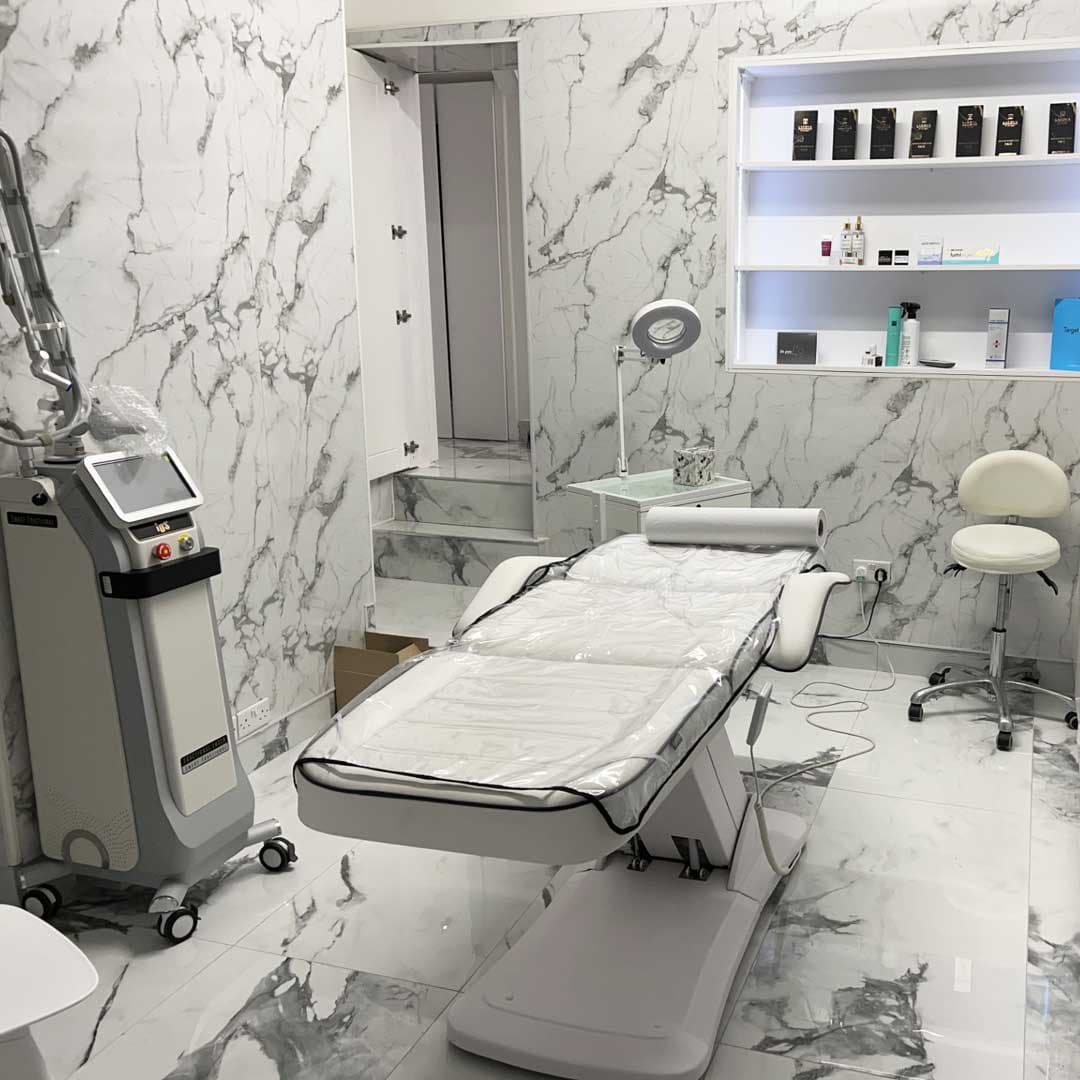
If acne scarring has been bothering you, a proper assessment is the best first step. Clients travel to our Southwell clinic from Mansfield, Nottingham and Newark to map out a realistic plan. Before you book, you may find it helpful to read what CO2 laser recovery looks like day by day, or check starting prices on our price guide.
Book a free consultation at 17 Queen Street, Southwell. We will look closely at your scar types and skin tone, explain which options are likely to help and how many sessions to expect, and never recommend treatment that is not right for you.
This article is general information, not medical advice, and does not replace a face-to-face assessment. Individual results vary. Treatments at Skin Anatomy are available to adults aged 18 and over.
This article is general information, not personal medical advice. Treatments are for adults aged 18 and over, suitability is assessed at a consultation, and individual results vary. If you have a new or changing mole, or any skin symptom that worries you, please see your GP.
Book an Appointment
It's easy — and consultations are free.
Questions Answered
What is the best treatment for deep acne scars?
Can CO2 laser completely remove acne scars?
How many CO2 laser sessions do acne scars need?
Is CO2 laser safe for darker skin with acne scars?
Should I wait after isotretinoin before laser for acne scars?
Magdalena Wasiewicz
Founder & Lead Aesthetic Practitioner
Founder of Skin Anatomy, fully qualified to the highest level in aesthetic practice and currently studying medicine.
Open Profile