Anti-Wrinkle Injections: What to Expect at Your First Appointment
From the face-to-face prescriber consultation to aftercare and your two-week review: what really happens at a first anti-wrinkle appointment.
 Magdalena Wasiewicz7 min read
At your first anti-wrinkle appointment, expect a face-to-face consultation with a prescriber before anything is injected: your medical history, goals, photographs and written consent. If treatment is suitable, the injections take only minutes, the effect builds over about two weeks and typically lasts three to four months, though this varies.
If you have never had anti-wrinkle injections before, it is completely normal to feel a little nervous. Most of that nervousness comes from not knowing what will happen, so this guide walks through a first visit at Skin Anatomy in Southwell step by step — from the questions we ask to the aftercare we give — so you can arrive informed and decide in your own time.
Do I need a consultation before anti-wrinkle injections?
Yes. Anti-wrinkle injections contain a prescription-only medicine, so in the UK they can only be given after a qualified prescriber has assessed you in person. A face-to-face consultation is not a formality: it is how the prescriber decides whether treatment is safe and appropriate for you, and it is your chance to ask questions before you commit to anything. Be wary of anywhere that offers to prescribe over a quick message or video call, or that treats the consultation as a sales pitch.
At Skin Anatomy consultations are free, and there is no expectation that you book treatment at the end of one. Some people are ready to go ahead; many prefer to think it over, and that is exactly what a consultation is for.
What we ask about
- Your medical history, including any neurological or neuromuscular conditions, such as myasthenia gravis, and any previous surgery or treatment on your face.
- Medicines and supplements, because some can increase bruising or interact with the treatment.
- Allergies and previous reactions to any cosmetic injectable.
- Pregnancy and breastfeeding — treatment is not recommended if you are pregnant, trying to conceive or breastfeeding.
- Your skin on the day — an infection, cold sore or inflammation in the area means treatment should wait.
- What bothers you and why, plus any important dates coming up, so timing can be planned sensibly.
Setting realistic goals
Anti-wrinkle injections relax the specific muscles that crease the skin when you frown, raise your eyebrows or squint. They are best at softening dynamic lines — the ones that appear with expression — such as frown lines, forehead lines and crow’s feet. Deeper lines that are etched in even when your face is at rest usually soften rather than disappear, and lines caused by volume loss or sun damage often respond better to other treatments. A good prescriber will tell you honestly what is achievable, and whether you might not need treatment at all.
We take photographs so you and your practitioner can compare later, and we explain the benefits, risks, alternatives and aftercare before asking you to sign a consent form. You are always free to change your mind.
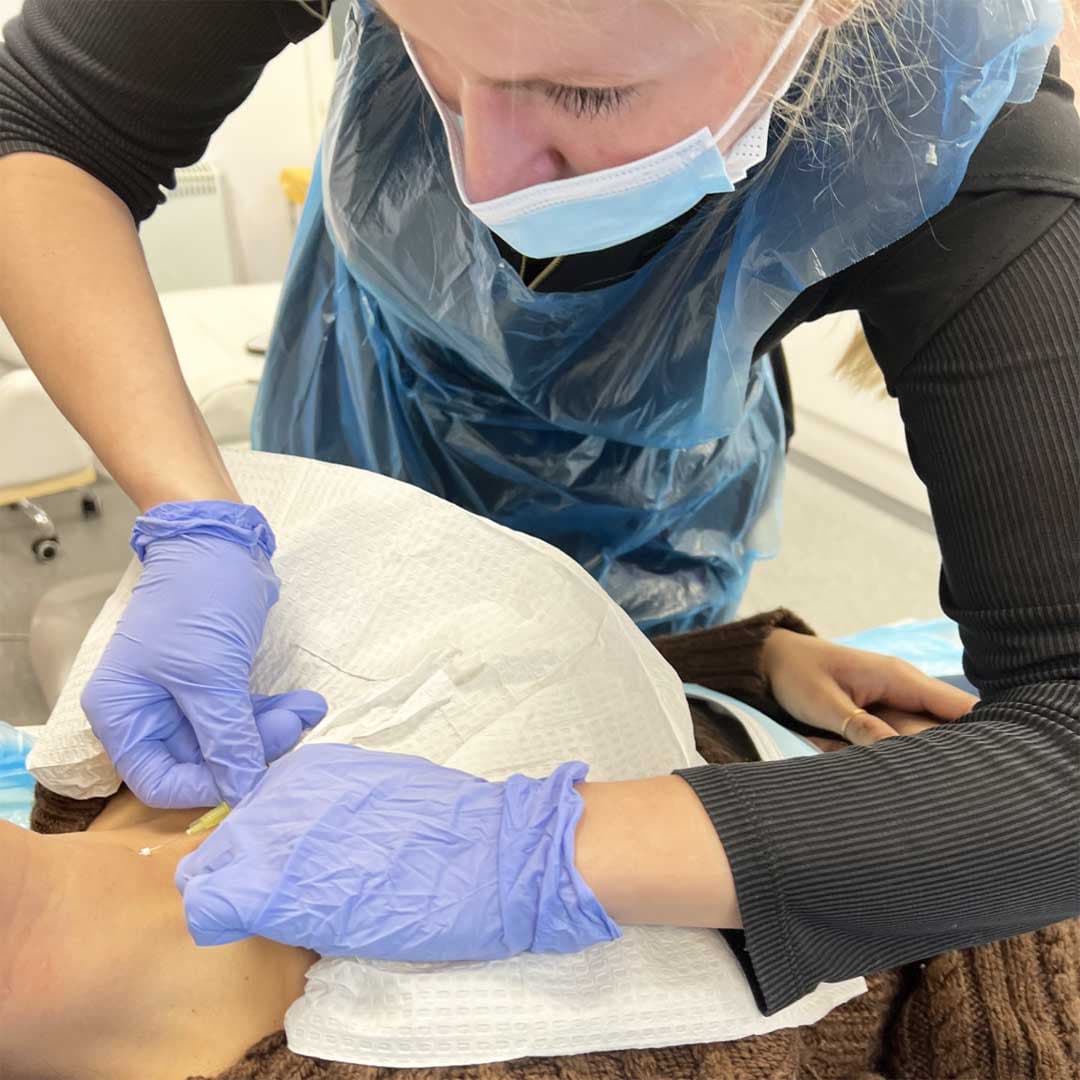
What happens during the treatment appointment?
- Check-in and consent. We confirm nothing has changed in your health since your consultation and go over the plan again.
- Cleansing. Make-up is removed and the skin is thoroughly cleaned.
- Assessment in motion. You will be asked to frown, raise your eyebrows and smile so the practitioner can see how your muscles move — no two faces move in quite the same way. Small injection points may be marked.
- Cooling for comfort. We use TargetCool, a CO2 skin cooling device, to chill the skin precisely at each injection point, which many clients find makes treatment more comfortable.
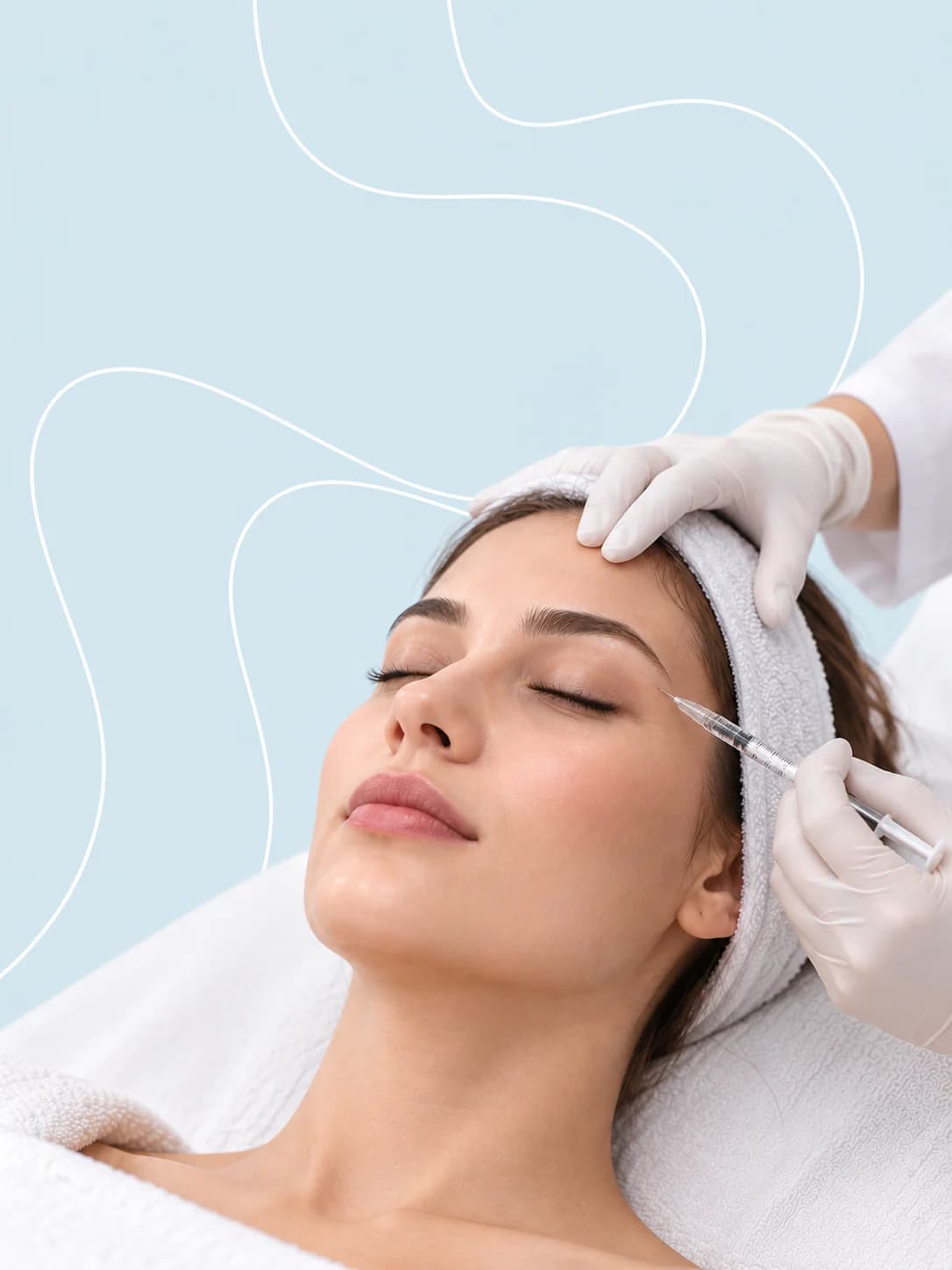
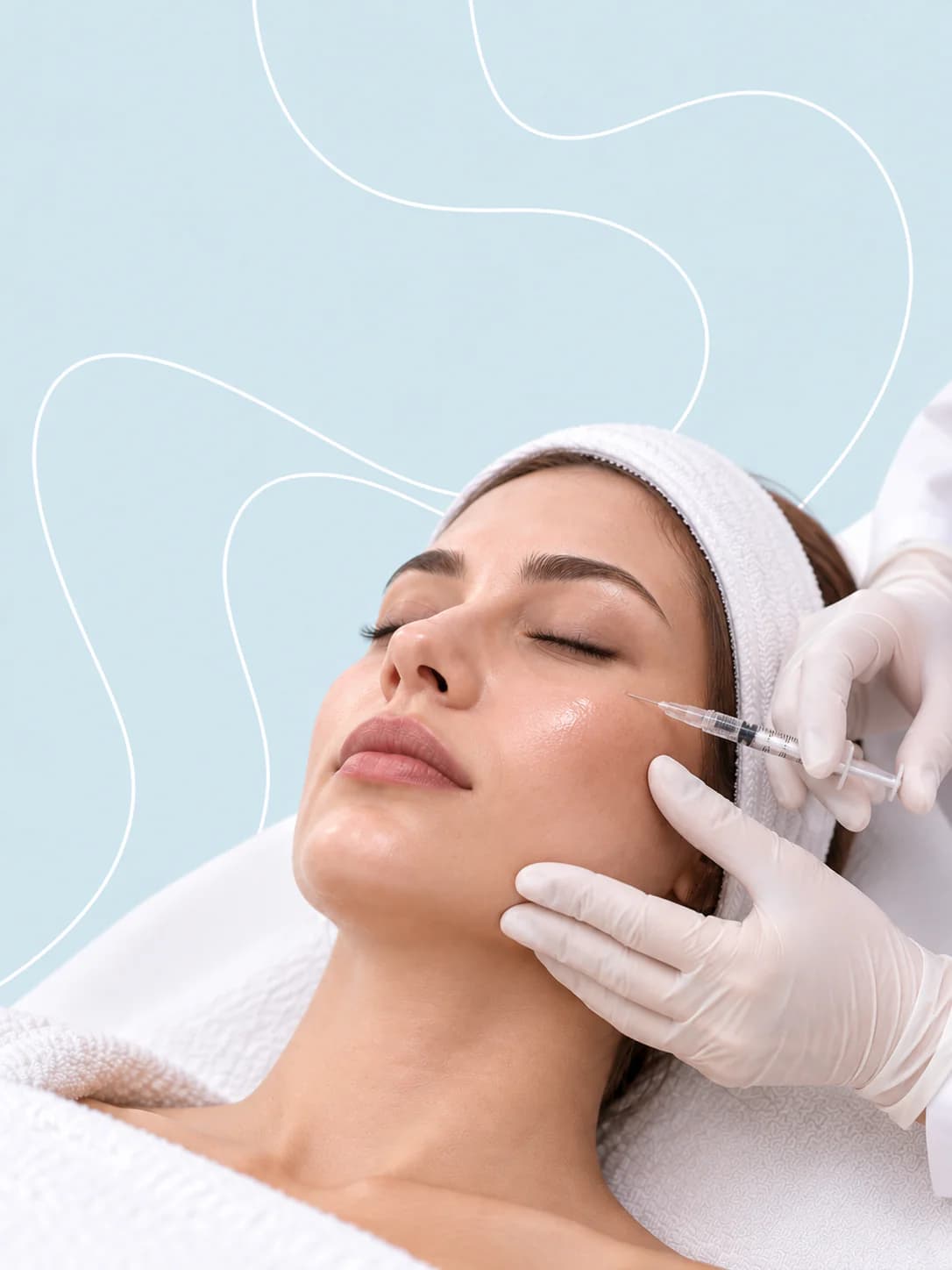
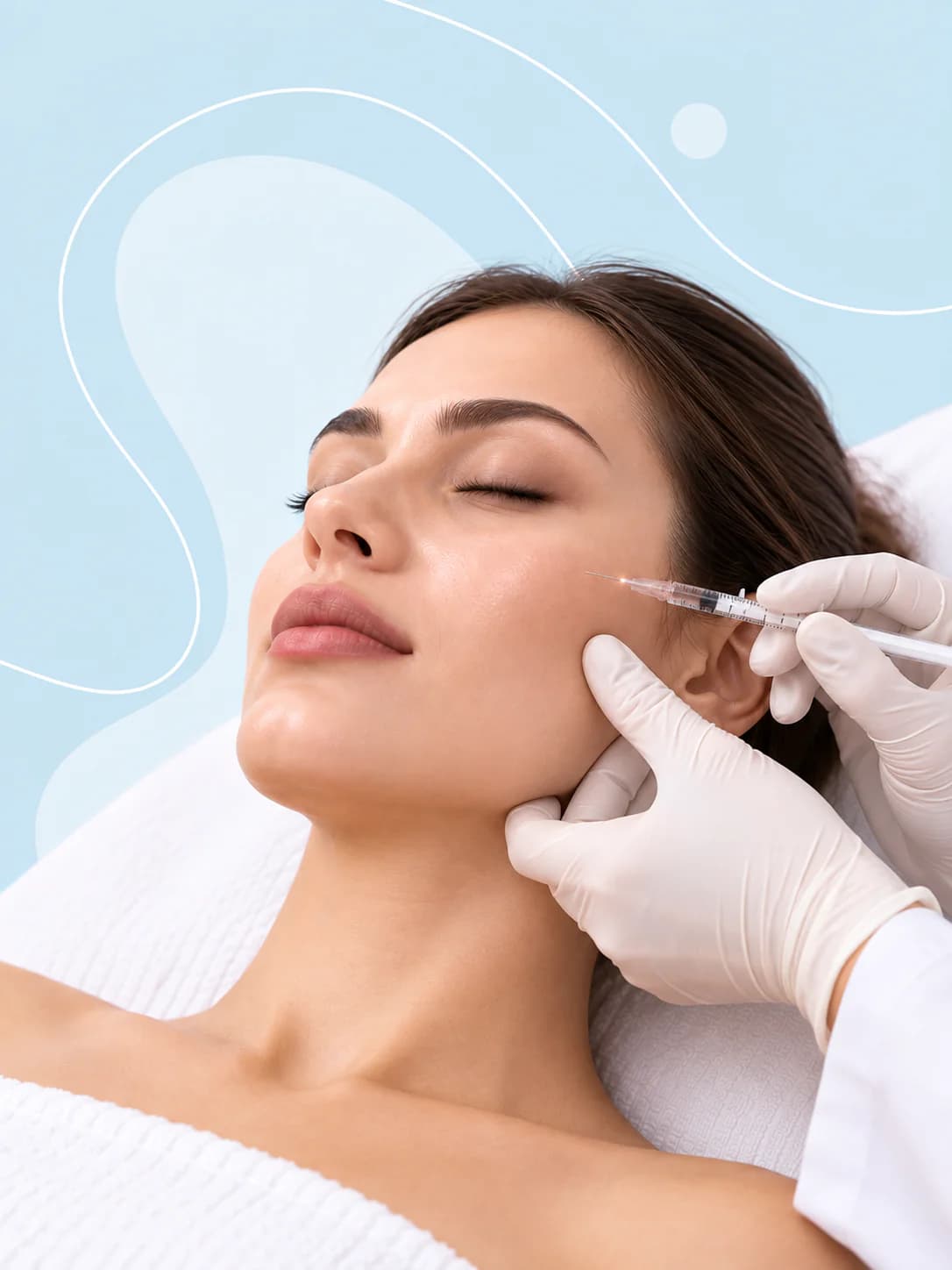
- Injections. Small amounts are placed with a very fine needle. For a typical area this takes a few minutes.
- Aftercare. You leave with written aftercare advice and a date for your review.
Most treatment appointments take around 30 minutes including preparation, although the injections themselves are quick. Most people can return to work or daily activities straight afterwards.
Do anti-wrinkle injections hurt?
Most clients describe a brief scratch or sting that is over in seconds, but everyone’s sensitivity is different. Cooling the skin with TargetCool helps, and you can ask for a pause at any time. Afterwards the area may feel a little tender, and small raised bumps where the product was placed usually settle within about half an hour.
What should I avoid after anti-wrinkle injections?
Aftercare advice varies between practitioners and products, so always follow the written instructions you are given. Commonly recommended precautions include:
- not rubbing, massaging or pressing on the treated areas for the rest of the day;
- staying upright for around four hours rather than lying down flat;
- avoiding strenuous exercise, saunas, steam rooms and hot baths for 24 hours;
- avoiding alcohol for around 24 hours, as it can make bruising more likely;
- postponing facials, facial massage and other skin treatments on the area for about two weeks;
- waiting until the next day, where possible, before applying make-up over injection points.
When will I see results, and how long do they last?
The effect is gradual rather than immediate. As a general guide:
| When | What to expect |
|---|---|
| Straight after | Possible redness, small bumps and pinpoint marks; no visible change to lines yet |
| Days 2–5 | Movement starts to soften as the treatment begins to take effect |
| Around 2 weeks | Close to the full effect; your review appointment |
| Weeks 2–12 | A smoother, more rested look while movement stays reduced |
| Around 3–4 months | Movement gradually returns and lines begin to reappear |
How long results last varies with the area treated, the dose, the strength of your muscles and your metabolism. There is no need to repeat treatment the moment movement returns; some people prefer a lighter, less frequent approach.
Why is there a review at two weeks?
Because the effect takes up to two weeks to develop, this is the right time to judge the result. At your review we compare photographs, check symmetry and discuss how you feel. If one side is moving more than the other, the prescriber may decide a small adjustment is appropriate. It is also a useful moment to note what you liked, so any future treatment can be tailored to you.
What are the side effects of anti-wrinkle injections?
Anti-wrinkle injections are widely performed in the UK, but like any medical treatment they carry risks. Your prescriber should talk you through them before you consent.
- Common and short-lived: redness, swelling or tenderness at injection points, small bruises and a mild headache in the first day or two.
- Less common: an uneven result, raised or “surprised” eyebrows, or a heavy feeling in the forehead, which can often be improved at review.
- Uncommon: temporary drooping of an eyebrow or eyelid if the product affects a nearby muscle. This typically improves over several weeks as the effect wears off.
- Rare: an allergic reaction. Very rarely the effect can spread beyond the treated area; if you notice difficulty swallowing, speaking or breathing after treatment, seek urgent medical help by calling 999.
If anything worries you after your appointment, contact the clinic that treated you. Knowing exactly how to reach your practitioner is part of a safe treatment.
Questions to ask at your first consultation
- Who will prescribe the treatment, and who will carry it out?
- What training and insurance do they have for this treatment?
- Which areas do you recommend, and why — or would something else suit me better?
- What results are realistic for my lines, and how long might they last for me?
- What does the price include? (Our current prices are listed on the price guide.)
- What should I do, and who do I contact, if I am worried afterwards?
For a wider checklist, read our guide on how to choose a safe aesthetic clinic in Nottinghamshire.
What if anti-wrinkle injections aren’t right for me?
Sometimes a consultation shows that a different approach — or a combination — would suit you better. Expression lines are only one part of how skin ages, and our page on fine lines and wrinkles explains the options in more detail. As a guide:
- Skin boosters can improve hydration and fine, crepey texture that muscle-relaxing treatment does not address.
- Polynucleotides are often considered for thin, delicate skin under the eyes and on the neck; our guide to polynucleotides vs skin boosters compares the two.
- CO2 laser resurfacing can soften lines at rest, sun damage and uneven texture by stimulating new collagen.
- Dermal fillers may help folds caused by lost volume rather than muscle movement.
Book a free consultation in Southwell
Our clinic is at 17 Queen Street, Southwell, an easy drive for clients coming from Nottingham, Newark and Mansfield. If you are thinking about anti-wrinkle injections for the first time, book a free consultation. We will take the time to listen, answer your questions honestly and help you decide whether treatment is right for you, with no pressure either way.
This article is general information, not medical advice. Anti-wrinkle injections are a prescription-only treatment and require a face-to-face consultation with a prescriber. Individual results vary. All treatments at Skin Anatomy are for adults aged 18 and over.
This article is general information, not personal medical advice. Treatments are for adults aged 18 and over, suitability is assessed at a consultation, and individual results vary. If you have a new or changing mole, or any skin symptom that worries you, please see your GP.
Book an Appointment
It's easy — and consultations are free.
Questions Answered
Can I have anti-wrinkle injections on the day of my consultation?
How long does a first anti-wrinkle appointment take?
Can I wear make-up after anti-wrinkle injections?
What happens if my anti-wrinkle result looks uneven?
Can I have anti-wrinkle injections while pregnant or breastfeeding?
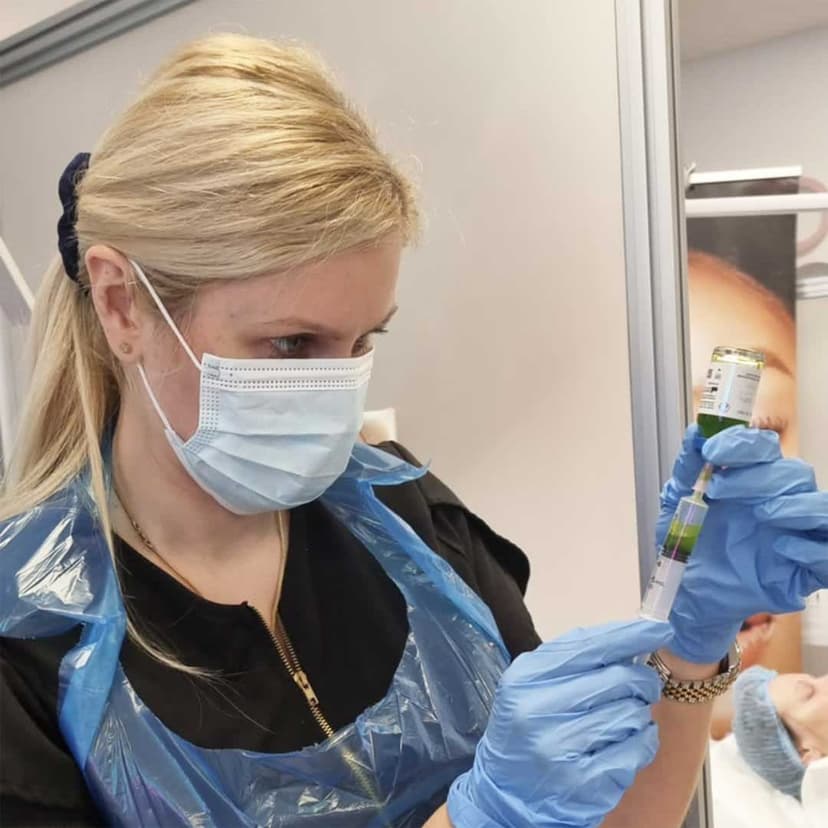
Magdalena Wasiewicz
Founder & Lead Aesthetic Practitioner
Founder of Skin Anatomy, fully qualified to the highest level in aesthetic practice and currently studying medicine.
Open Profile