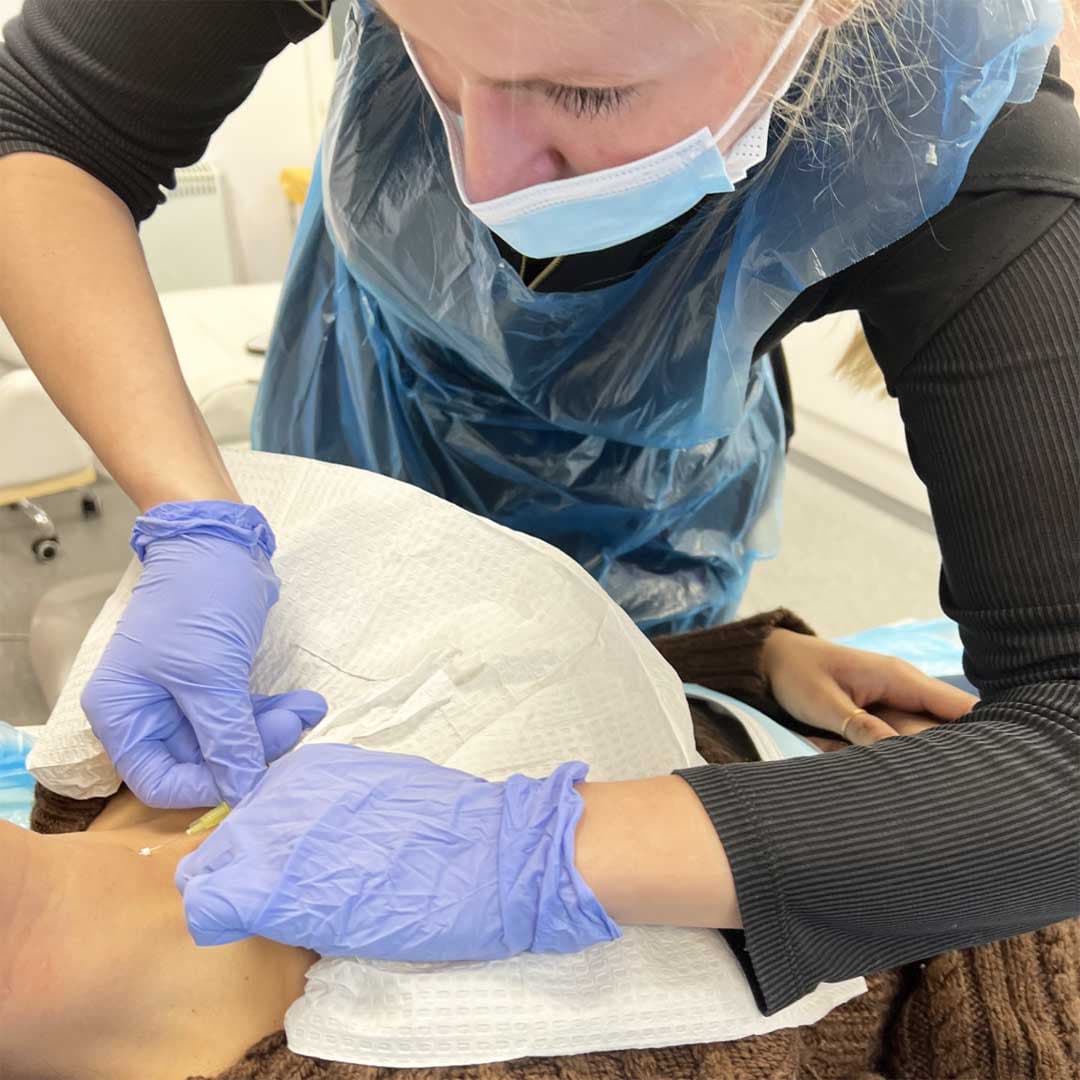
Laser Hair Removal: How Many Sessions, and Does It Work on All Skin Types?
Why most people need six to eight laser hair removal sessions, how diode lasers treat darker skin safely, and which hair colours don’t respond.
 Magdalena Wasiewicz7 min read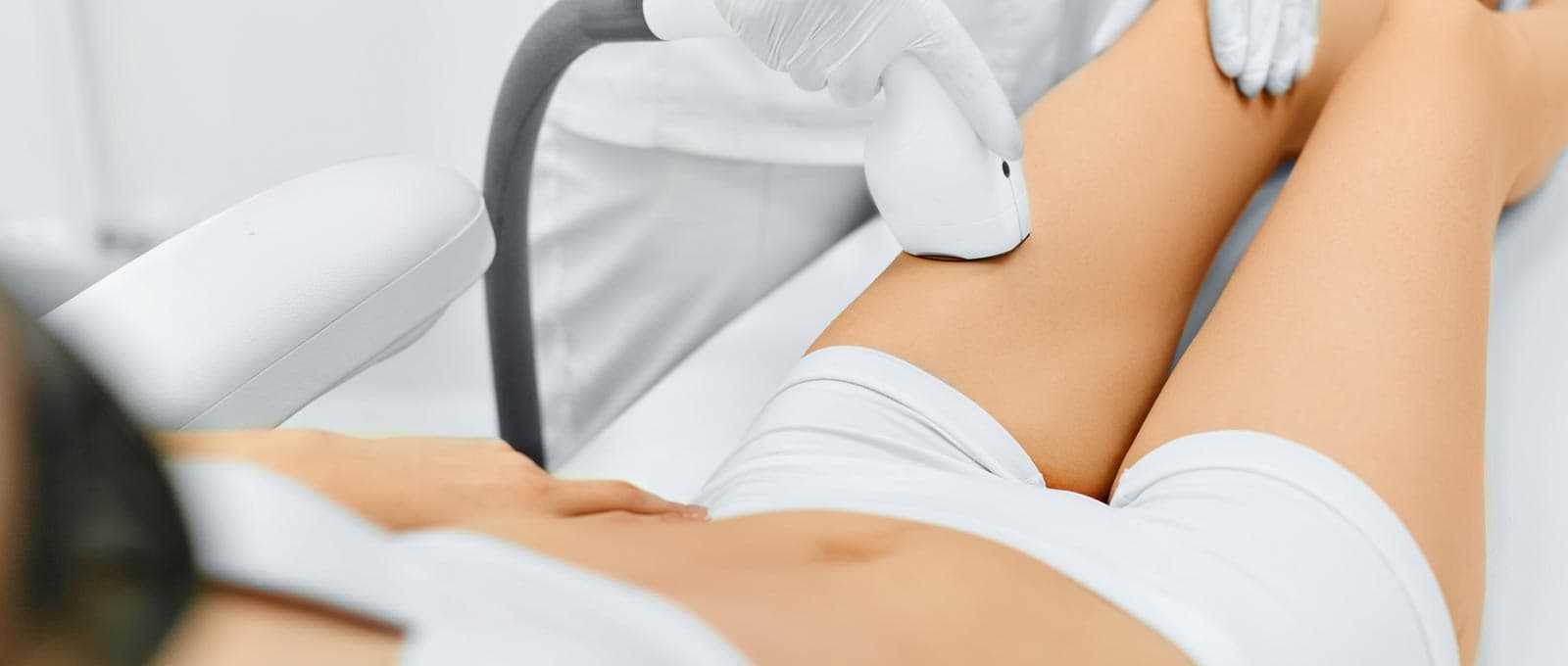
Most people need six to eight laser hair removal sessions, spaced four to eight weeks apart, because the laser only affects hairs in their active growth phase. Diode lasers can treat a wide range of skin tones, including darker skin, with careful settings and a patch test, but they work poorly on white, grey, red or very fair hair.
How does laser hair removal work?
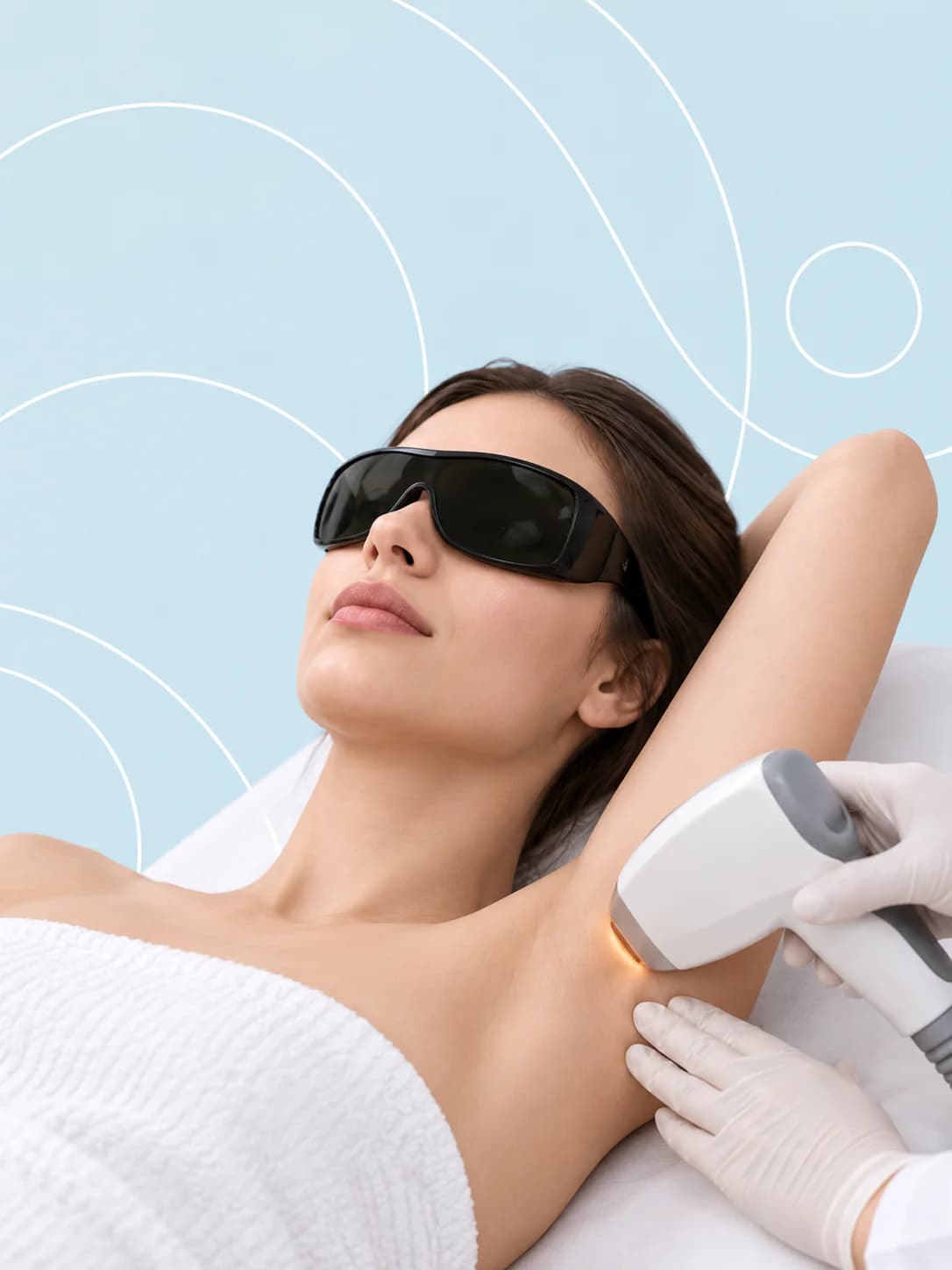
Laser hair removal is based on a principle called selective photothermolysis. The laser emits a single, focused wavelength of light that is absorbed by melanin, the pigment in the hair shaft and follicle. That light turns into heat inside the follicle, damaging the structures that produce new hair, while the surrounding skin absorbs far less energy and is protected by cooling.
At Skin Anatomy we use a diode laser. Diode lasers typically work at a wavelength of around 800–810 nanometres, which reaches the depth of the hair bulb and is absorbed less by the pigment in the upper layers of skin than some shorter-wavelength devices. That is one reason diode lasers are widely used across a broad range of skin types.
It helps to be clear about the goal. Laser treatment gives long-term hair reduction: most clients see far fewer hairs after a full course, and the hairs that remain tend to grow back finer, lighter and more slowly. It is not a promise that every hair will be gone for good, and anyone who tells you otherwise is overselling it.
How many sessions of laser hair removal will I need?
Hair grows in cycles. At any moment some hairs are in the active growth phase (anagen), some are transitioning (catagen) and some are resting (telogen). Only actively growing hairs are firmly attached to the pigmented bulb the laser needs to heat, so each session can only affect the hairs that happen to be growing at the time.
That is why a single session never clears an area, and why sessions are spaced to catch the next wave of hairs entering the growth phase. For most people a course of six to eight sessions is typical. Some people need more, particularly for coarse facial hair or where hormones are involved, and many benefit from an occasional top-up once or twice a year after the main course.
Typical sessions and intervals by area
These ranges are a general guide rather than a promise. Your plan is set at consultation and adjusted as we see how your hair responds.
| Area | Typical course | Usual interval | Worth knowing |
|---|---|---|---|
| Upper lip or chin | 8–10 sessions or more | 4–6 weeks | Facial hair is often hormone-driven and may need maintenance |
| Underarms | 6–8 sessions | 4–6 weeks | Usually responds well because hair is dense and dark |
| Bikini line or Brazilian | 6–8 sessions | 6–8 weeks | Coarse hair responds well; the area can feel more sensitive |
| Legs (half or full) | 6–8 sessions | 6–10 weeks | Leg hair grows more slowly, so gaps are longer |
| Back or chest | 8–10 sessions | 6–8 weeks | Large areas with mixed hair thickness can need extra sessions |
Hairs treated in a session usually shed over one to three weeks, so the area can look as though hair is still growing for a while. That is normal. You can see our per-session prices by area on the price guide.
Does laser hair removal work on all skin types?
Not all skin and hair combinations respond equally, but modern diode lasers can treat far more people than older equipment could. What matters is the contrast between the hair and the skin. The laser is looking for pigment in the hair, so the more pigment there is in the surrounding skin, the more carefully energy has to be delivered to avoid heating the skin itself.
Practitioners describe skin using the Fitzpatrick scale, from type I (very fair, always burns) to type VI (deeply pigmented, rarely or never burns). For darker skin we use more conservative settings, longer pulses and extra cooling. That can mean a few more sessions, but it keeps the risk of burns and pigment changes as low as possible.
| Fitzpatrick type | Typical description | What to expect |
|---|---|---|
| I–II | Very fair to fair; burns easily | Good contrast with dark hair; lighter hair limits results |
| III | Medium; sometimes burns, tans gradually | Usually a good candidate with standard precautions |
| IV | Olive or light brown; rarely burns | Suitable with adjusted settings; recent tanning must be avoided |
| V | Brown; very rarely burns | Often suitable with conservative settings, cooling and a patch test |
| VI | Deeply pigmented dark brown to black | Can be possible with very cautious settings; the highest risk of pigment change, so careful assessment is essential |
If we think the risk outweighs the likely benefit for your skin, we will tell you honestly rather than book a course that is unlikely to work well.
What about grey, white, red or blonde hair?
This is the real limitation. White and grey hairs contain almost no melanin, and red and very fair blonde hairs contain a type and amount of pigment that absorbs laser light poorly. With nothing for the laser to target, results are usually disappointing whatever your skin type. We will check your hair colour at consultation, and if laser is not the right tool we will say so.
Can laser help with hormonal hair growth?
Coarse, dark hair on the chin, upper lip, chest or tummy in women can be linked to hormonal conditions such as polycystic ovary syndrome. If you have noticed new or increasing hair growth, especially alongside irregular periods, it is worth speaking to your GP first. The NHS page on excessive hair growth (hirsutism) explains when to get checked, and sudden hair growth with other body changes should be seen promptly.
Laser can still help people with hormone-related hair, and many find it makes a real difference to daily life. Expect more sessions and ongoing maintenance, because hormones can keep activating new follicles. Our page on unwanted hair covers the options in more detail.
Who should not have laser hair removal?
- Anyone under 18 — all treatments at Skin Anatomy are for adults only.
- People who are pregnant or breastfeeding; we recommend waiting.
- Anyone with a recent tan, sunburn, sunbed use or self-tan on the area.
- People taking medicines that make skin more sensitive to light, or who have recently taken isotretinoin — tell us about any new medication.
- Skin that is broken, infected or has an active cold sore in the area.
- Anyone with a history of keloid scarring, or of seizures triggered by light.
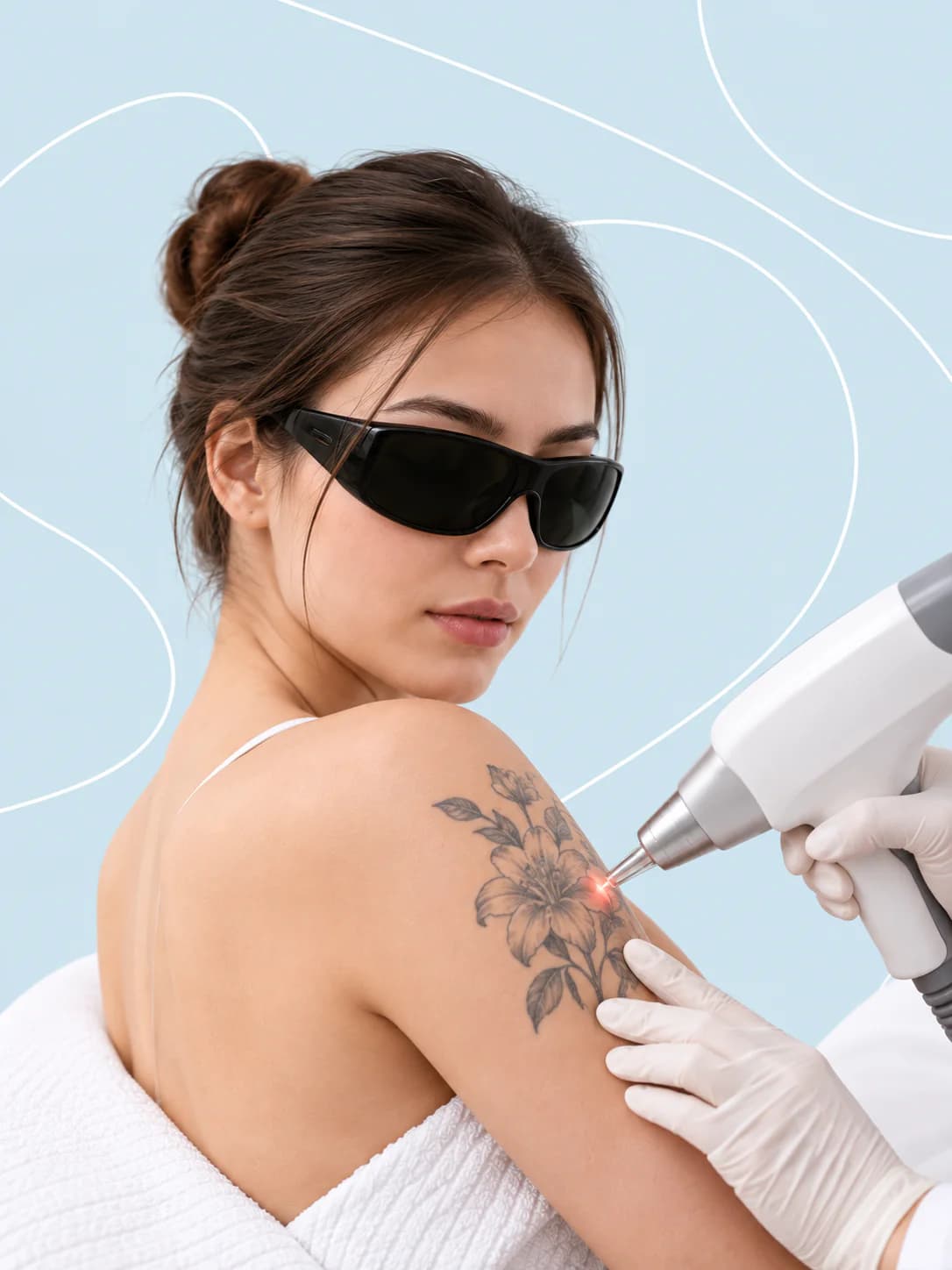
- Areas with tattoos, or moles that have not been checked — we treat around them.
How do I prepare for my first session?
- Have your free patch test. A patch test is required before your first full session so we can check how your skin responds to the settings chosen for you.
- Shave the area the day before. This removes the hair above the skin, so energy goes into the follicle instead of scorching surface hair.
- Stop waxing, plucking, threading and epilating for several weeks beforehand. These remove the hair from the follicle, leaving the laser nothing to target.
- Avoid sun, sunbeds and fake tan for several weeks before treatment and throughout your course.
- Arrive with clean skin, free of deodorant, make-up, perfume or creams on the area.
What does it feel like, and what are the side effects?
Most clients describe each pulse as a warm snap, like a flick from an elastic band. Cooling makes it more comfortable, and small areas such as the upper lip take only minutes. Sensitivity varies from person to person and is often greater in the bikini area.
Common, short-lived effects include redness and small raised bumps around the follicles, which usually settle within a few hours to a couple of days. Less commonly, the skin can blister or crust, or develop temporary darker or lighter patches; the risk of pigment change is higher in darker or recently tanned skin. Rarely, finer hair can grow nearby after treatment. Protective eyewear is worn throughout. If you notice blistering, pain that is getting worse or any sign of infection, contact us straight away.
Laser hair removal aftercare
- Apply a high-factor sunscreen (SPF 50) to exposed treated areas every day and keep them out of strong sun.
- Avoid hot baths, saunas, steam rooms, swimming pools and hard exercise for 24–48 hours.
- Skip perfumed products and deodorant on the treated area for 24 hours.
- Shave between sessions if you need to, but do not wax, pluck or thread.
- Let treated hairs shed on their own; gentle exfoliation after a few days can help.
Why winter is a good time to start
A full course runs for several months, and skin needs to be untanned throughout. Starting in the darker months means less sun exposure between sessions and much of your course completed before summer. It is one reason January is a popular time for clients from Southwell, Nottingham, Newark and Mansfield to begin.
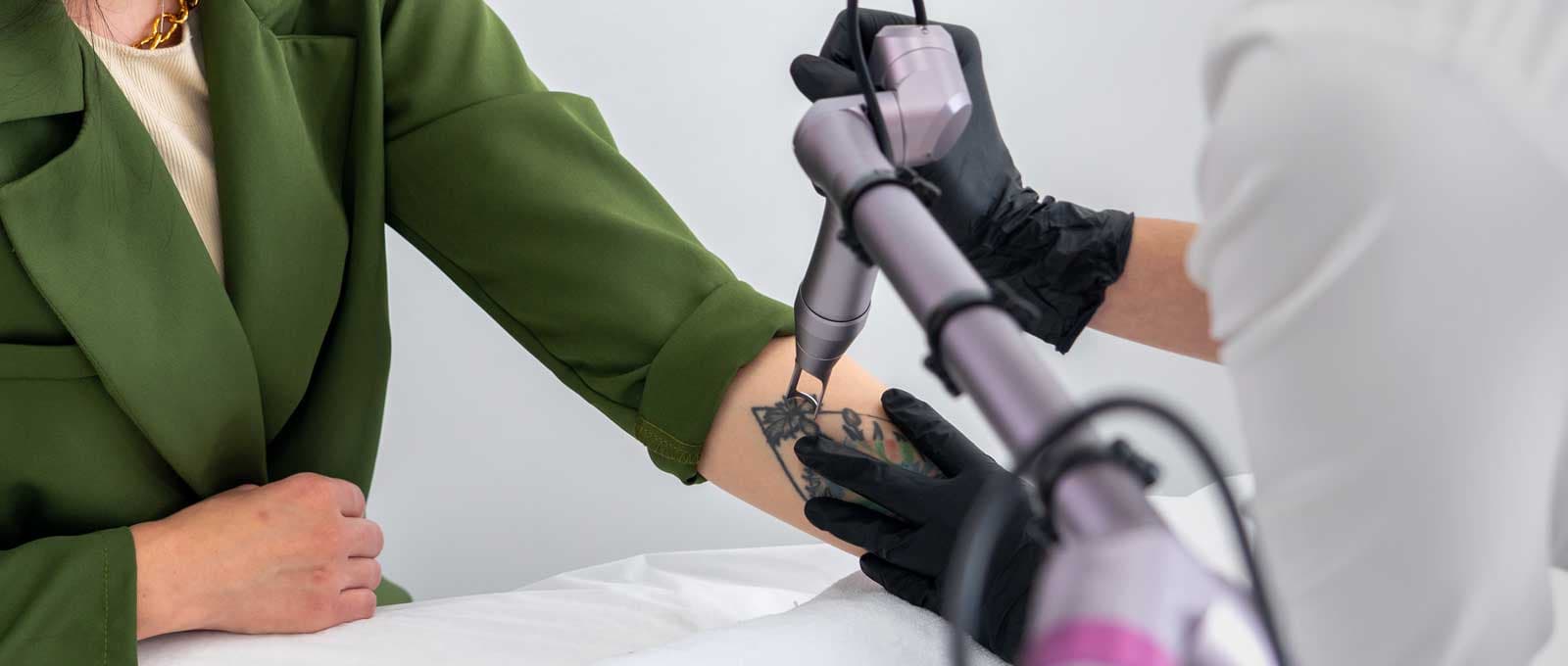
If you are also thinking about fading an old tattoo, our guide to laser tattoo removal covers sessions and aftercare, and our checklist on choosing a safe aesthetic clinic explains what to ask any provider.
Book your free consultation and patch test
At our clinic at 17 Queen Street, Southwell, we will look at your skin and hair, talk through your medical history, carry out your free patch test and give you an honest estimate of how many sessions you are likely to need. Read more about laser hair removal at Skin Anatomy, or book a free consultation online.
This article is general information, not medical advice. Individual results vary, and a consultation is needed to confirm suitability. Treatments at Skin Anatomy are for adults aged 18 and over.
This article is general information, not personal medical advice. Treatments are for adults aged 18 and over, suitability is assessed at a consultation, and individual results vary. If you have a new or changing mole, or any skin symptom that worries you, please see your GP.
Book an Appointment
It's easy — and consultations are free.
Questions Answered
Will hair grow back after a full course of laser hair removal?
Does laser hair removal work on dark skin?
Can I shave between laser hair removal sessions?
Why do I need a patch test before laser hair removal?
Does laser hair removal work on grey, blonde or red hair?
Magdalena Wasiewicz
Founder & Lead Aesthetic Practitioner
Founder of Skin Anatomy, fully qualified to the highest level in aesthetic practice and currently studying medicine.
Open Profile